
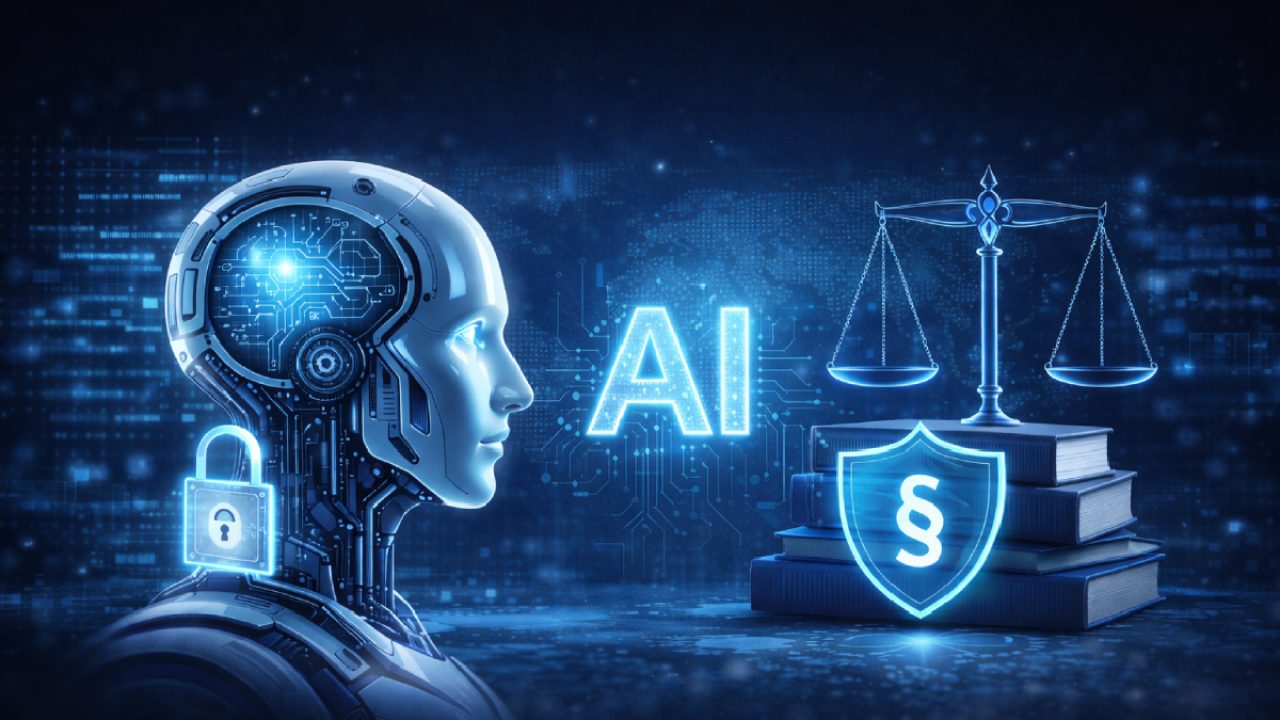
Artificial intelligence has transformed the way creative, technical and commercial content is produced. From automated art and music to software code and technical designs, machines increasingly generate outputs once attributed solely to human authors. This rapid development has raised complex questions around AI and Intellectual Property, particularly regarding ownership, authorship and legal protection of AI-generated works. Existing intellectual property frameworks were designed for human creativity, making their application to artificial intelligence both uncertain and contested.
This blog examines the legal challenges surrounding AI-generated works, with a focus on copyright, patents, data ownership and enforcement under current intellectual property regimes, including the Indian legal context.
Understanding AI and Intellectual Property in the Legal Context
AI and Intellectual Property intersect where machine-generated outputs seek legal protection traditionally granted to human creators. Intellectual property laws worldwide are premised on human authorship, inventorship and creative intent. Artificial intelligence systems, however, operate through algorithms, training data and autonomous decision-making processes. As AI systems increasingly produce creative and technical outputs with minimal human intervention, courts and regulators face the challenge of fitting these outputs into existing legal categories. This tension has sparked global debate on whether AI-generated works should receive intellectual property protection and, if so, who should hold the rights.
What Constitutes an AI-Generated Work?
An AI-generated work refers to content created autonomously by an artificial intelligence system without direct human creative input at the point of generation. Examples include artworks produced by generative models, music composed by algorithms, written content generated by language models and technical designs created through machine learning processes. The degree of human involvement varies widely. In some cases, humans provide prompts or training data, while in others the system independently produces outputs based on prior learning. This variation complicates legal assessment of authorship and ownership.
Copyright Challenges in Protecting AI-Generated Works
Copyright law protects original literary, artistic, musical and dramatic works created by human authors. In India, the Copyright Act, 1957 links authorship to a natural or legal person, creating immediate difficulty for AI-generated works. Indian law recognises computer-generated works and assigns authorship to the person who causes the work to be created. However, this provision was drafted before modern generative AI and offers limited clarity in cases where human involvement is minimal or indirect. Courts globally remain cautious in extending copyright protection to works lacking human creativity. The absence of human authorship raises questions about originality, moral rights and duration of protection.
Patentability of AI-Generated Inventions
Patent law presents another complex challenge. Patents require an inventor, novelty, inventive step and industrial applicability. Traditionally, inventors must be natural persons. AI systems increasingly contribute to technical solutions and product designs. However, most jurisdictions, including India, do not recognise artificial intelligence as an inventor. Patent applications naming AI systems as inventors have been rejected on the basis that legal personality is required. This creates uncertainty for businesses relying on AI-assisted research and development, as ownership and inventorship attribution remain unresolved.
Ownership Issues in AI-Generated Intellectual Property
Determining ownership of AI-generated works is one of the most contested issues in AI and Intellectual Property law. Possible claimants include the developer of the AI system, the user who deployed it, the owner of training data, or the organisation controlling the AI infrastructure. Current legal frameworks do not offer a uniform approach. Contractual arrangements often fill the gap, allocating rights through licensing and usage agreements. However, reliance on contracts alone may not provide certainty in enforcement against third parties. Ownership ambiguity increases legal risk, particularly in commercial exploitation and cross-border transactions.
Role of Training Data and Data Rights
AI systems depend on vast datasets, many of which include copyrighted material. Training AI on protected works raises concerns around unauthorised reproduction, derivative works and infringement. Courts and regulators are examining whether training constitutes fair use or requires licensing. The absence of transparency in training processes complicates enforcement and compliance. Data ownership and access rights have therefore become integral to AI and Intellectual Property disputes, especially for generative models.
Trade Secrets and Confidentiality in AI Systems
Given limitations in copyright and patent protection, many organisations rely on trade secret law to protect AI algorithms, models and datasets. Confidentiality agreements and access controls play a crucial role.
Trade secret protection requires active measures to maintain secrecy. Once disclosed or reverse engineered, protection is lost. This creates enforcement challenges, particularly in collaborative development environments. For companies operating in India, trade secret strategies often complement formal IP protection mechanisms administered by bodies such as Intellectual Property India.
Liability and Infringement Risks in AI-Generated Content
AI-generated works may infringe existing intellectual property rights, even without human intent. This raises questions about liability for infringement. Responsibility may fall on developers, deployers or users depending on control and foreseeability. Courts increasingly examine the role played by each party in enabling infringement. Risk management through compliance checks, licensing and content filters has become essential for organisations deploying AI systems.
International Developments and Regulatory Trends
Globally, policymakers are re-evaluating intellectual property frameworks in response to AI. Jurisdictions such as the European Union, United Kingdom and United States are exploring legislative reforms, guidance notes and case law developments. International organisations like the World Intellectual Property Organization have initiated consultations to harmonise approaches to AI and Intellectual Property.
India is closely observing these developments while balancing innovation, public interest and legal certainty.
Strategic Role of Legal Counsel in AI-Related IP Protection
Navigating AI-related intellectual property issues requires specialised legal expertise across technology, contracts and regulatory compliance. Businesses must assess risks at the design, deployment and commercialisation stages. In the middle of AI strategy planning, many organisations seek guidance from the best IP law firm and lawyers in India to structure ownership, licensing and enforcement frameworks that align with current law and anticipated reforms.
Cross-Border Enforcement and Commercialisation Challenges
AI-generated works often circulate across jurisdictions instantly. Differences in national IP laws create enforcement gaps and compliance challenges. Global businesses must coordinate protection strategies across multiple jurisdictions. Towards the end of international expansion planning, support from best International IP Law lawyers becomes essential to manage cross-border ownership, licensing and dispute resolution.
Future Outlook for AI and Intellectual Property Law
The legal treatment of AI-generated works is likely to evolve through a combination of judicial interpretation, legislative reform and international cooperation. Policymakers face the challenge of encouraging innovation without undermining fundamental principles of intellectual property law. Clarity on authorship, ownership and liability will be crucial for sustainable AI adoption. Until then, businesses must rely on cautious legal structuring and adaptive compliance strategies.
Conclusion
AI and Intellectual Property law stands at a critical crossroads. As artificial intelligence reshapes creativity and innovation, existing legal frameworks struggle to accommodate machine-generated works. Uncertainty around ownership, authorship and enforcement presents significant challenges for businesses, creators and regulators alike. Until clearer legal standards emerge, proactive legal structuring, informed risk management and strategic use of intellectual property tools remain essential for protecting value in the age of artificial intelligence.
Frequently Asked Questions (FAQs)
Q1. Can AI-generated works be protected under copyright law?
Protection remains uncertain. Most jurisdictions require human authorship, limiting protection for purely AI-generated works.
Q2. Who owns intellectual property created by AI?
Ownership depends on human involvement, contractual terms and jurisdiction. There is no uniform legal rule.
Q3. Can AI be named as an inventor in patent applications?
Currently, AI systems are not recognised as inventors under Indian and most international patent laws.
Q4. Does training AI on copyrighted material amount to infringement?
This depends on jurisdiction and context. Courts are still developing standards for permissible use.
Q5. How can businesses protect AI-related intellectual property?
Through a combination of contracts, trade secrets, careful data management and strategic IP planning.