In today’s competitive and content driven economy, understanding the Difference between Copyright & Trademark is essential for businesses, creators and entrepreneurs. Many people use these terms interchangeably. However, they protect distinct forms of intellectual property and serve different commercial purposes. A clear grasp of the difference between copyright and trademark helps avoid legal disputes, protects brand value and strengthens enforcement strategy.
This article explains the legal foundations of both rights, clarifies how they operate under Indian law, and addresses common misconceptions. The discussion reflects judicial interpretation, statutory provisions and regulatory guidance to ensure accuracy and relevance.
Difference between Copyright & Trademark
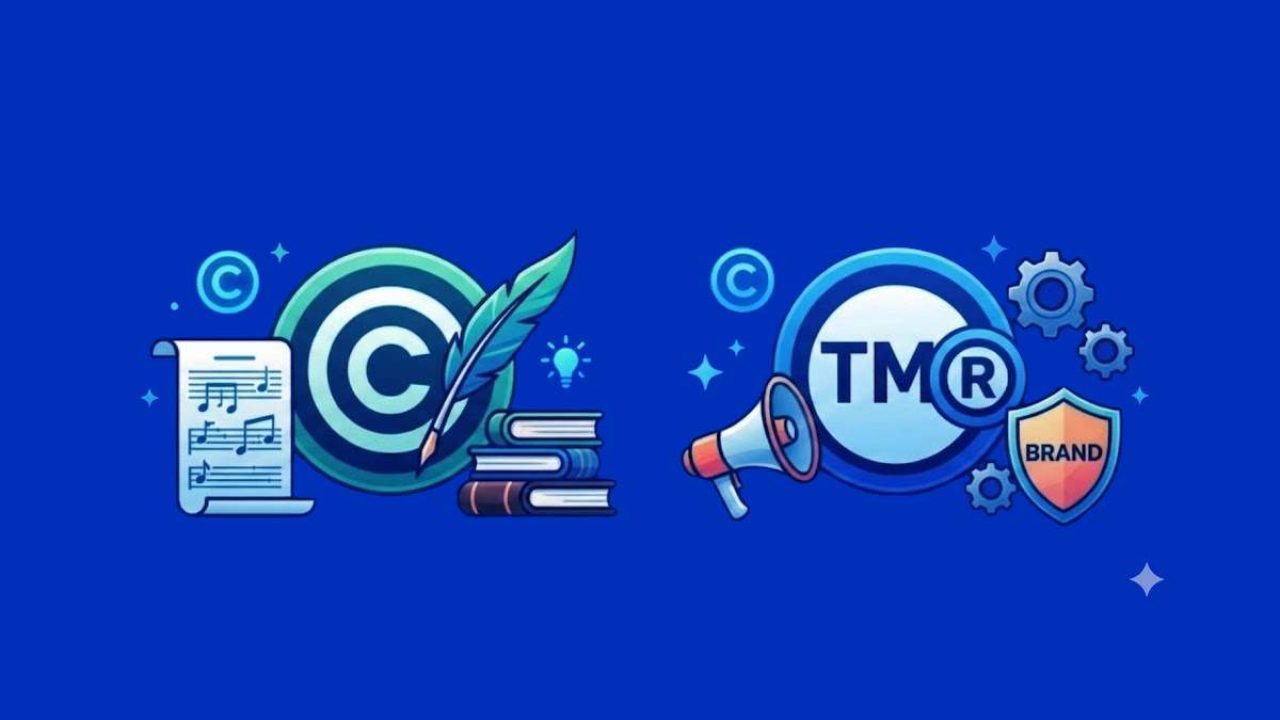
The Difference between Copyright & Trademark lies primarily in the nature of subject matter protected and the purpose of protection. Copyright safeguards original creative expression. Trademark protects brand identifiers used in trade.
Under the Copyright Act 1957, copyright subsists in original literary, dramatic, musical and artistic works, cinematograph films and sound recordings. Protection arises automatically upon creation of an original work. The official framework and registration process are available on the government portal at copyright.gov.in, administered by the Department for Promotion of Industry and Internal Trade.
In contrast, trademark protection is governed by the Trade Marks Act 1999. A trademark may consist of a word, logo, slogan, shape or combination capable of distinguishing goods or services of one entity from another. The Trade Marks Registry functions under the Office of the Controller General of Patents, Designs and Trade Marks. Procedural details are available on ipindia.gov.in.
While copyright focuses on creative originality, trademark law focuses on distinctiveness and consumer association. This conceptual difference shapes every other legal distinction.
Purpose and Commercial Objective
Copyright encourages creativity. It grants exclusive rights to reproduce, distribute, perform and adapt original works. The aim is to reward authors and promote cultural and artistic development.
Trademark law protects brand identity. It prevents confusion in the marketplace. Consumers rely on trademarks to identify source and quality. Trademark rights build goodwill and brand equity over time.
For example, a novel is protected by copyright. The title of a series, if distinctive and used commercially, may function as a trademark. A company logo may attract both copyright and trademark protection, but for different reasons.
Subject Matter of Protection
Copyright protects expression. It does not protect ideas. Once an original work is fixed in tangible form, protection arises automatically. Registration is optional but strengthens evidentiary value in litigation.
Trademark protects signs used in commerce. Registration is not mandatory to claim rights, but registered marks enjoy stronger statutory protection and nationwide recognition. An unregistered mark may still be protected through passing off action, though enforcement is more complex.
This distinction is central to the difference between copyright and trademark. Copyright protects creative content. Trademark protects commercial identity.
Duration of Protection
The duration of protection further illustrates the Difference between Copyright & Trademark. Under Indian law, copyright in literary, dramatic, musical and artistic works lasts for the lifetime of the author plus sixty years. For cinematograph films and sound recordings, protection lasts sixty years from publication.
Trademark protection, once registered, can last indefinitely. Registration is valid for ten years and may be renewed repeatedly upon payment of renewal fees. As long as the mark is used and renewed, protection continues.
This indefinite duration reflects the commercial role of trademarks in sustaining brand reputation across generations.
Registration Requirements
Copyright protection arises automatically. Registration serves as prima facie evidence of ownership in court. The application process is outlined on copyright.gov.in and involves filing forms, paying prescribed fees and responding to objections if any arise.
Trademark rights require application before the Trade Marks Registry. The Registry examines distinctiveness, similarity with prior marks and compliance with statutory conditions. Details regarding classification and filing procedures are available on ipindia.gov.in.
In practice, businesses often secure both forms of protection. For instance, a logo design may be protected by copyright as an artistic work and registered as a trademark to secure exclusive commercial use.
Scope of Rights and Enforcement
Copyright grants the right to reproduce, publish, perform, communicate to the public and adapt the work. Infringement occurs when a substantial part of the work is copied without authorisation.
Trademark rights grant exclusive use of the mark in relation to specified goods or services. Infringement arises when a similar or identical mark is used in a manner likely to cause confusion.
Enforcement mechanisms differ slightly. Both regimes allow civil remedies such as injunctions and damages. Criminal penalties are also available in certain cases. Courts in India have developed substantial jurisprudence in both domains, particularly in technology and entertainment sectors.
Businesses often engage renowned copyright lawyers in India when dealing with complex infringement involving films, music or digital content. Strategic legal advice ensures accurate classification of claims and appropriate remedy selection.
Common Misconceptions
A frequent misconception is that registering a company name automatically grants copyright protection. Company registration under corporate law does not replace trademark registration. Brand protection requires separate filing under the Trade Marks Act.
Another misunderstanding relates to logos. A logo may enjoy copyright as an artistic work. However, without trademark registration, exclusive commercial use may not be fully secured against competitors in the same industry.
Understanding these nuances clarifies the practical difference between copyright and trademark in business strategy.
Overlap and Complementary Protection
Certain assets attract dual protection. A packaging design may be protected by copyright as an artistic work and by trademark if it functions as a source identifier. Advertising jingles may attract copyright as musical works and trademark protection if they serve as distinctive brand signals.
This overlap does not create conflict. Instead, it strengthens protection. Each right operates independently within its statutory framework.
International Protection
India is a signatory to the Berne Convention for copyright and to the Madrid Protocol for trademarks. These international instruments facilitate cross border protection. Copyright protection is automatic in member countries without formal registration. Trademark registration under the Madrid system enables streamlined filing in multiple jurisdictions.
Businesses operating internationally should align intellectual property strategy with export plans and digital distribution channels. Consulting best trademark lawyers in India helps structure global brand protection while ensuring compliance with domestic law.
Strategic Considerations for Businesses
Choosing between copyright and trademark is rarely an either or decision. Creative industries rely heavily on copyright. Consumer facing businesses prioritise trademark protection. Technology companies require both.
A start up developing a mobile application may rely on copyright to protect source code and design elements. Simultaneously, trademark registration secures the brand name and logo.
Proactive filing reduces enforcement costs. Delay in registration may weaken legal position. Early protection supports valuation, licensing and investor confidence.
Conclusion
The Difference between Copyright & Trademark extends beyond terminology. It reflects two distinct legal regimes serving different commercial objectives. Copyright protects original creative expression. Trademark protects brand identity and consumer trust.
Understanding the difference between copyright and trademark allows businesses to design comprehensive intellectual property strategies. Clear registration, careful documentation and timely enforcement reduce legal risk and strengthen competitive advantage. In a digital and global marketplace, informed protection is not merely advisable. It is essential.
Frequently Asked Questions (FAQs)
What is the main Difference between Copyright & Trademark?
Copyright protects original creative works such as books, music and films. Trademark protects brand identifiers such as names, logos and slogans used in commerce.
Can a logo be protected by both copyright and trademark?
Yes. A logo may qualify as an artistic work under copyright law and as a trademark if it distinguishes goods or services in trade.
Is registration mandatory for copyright in India?
No. Copyright arises automatically upon creation. Registration strengthens evidentiary value in legal proceedings.
How long does trademark protection last in India?
Trademark registration is valid for ten years and can be renewed indefinitely upon payment of renewal fees.
What happens if someone copies my brand name?
If the mark is registered, you may file a trademark infringement action. If unregistered, you may initiate a passing off claim subject to proof of goodwill and misrepresentation.