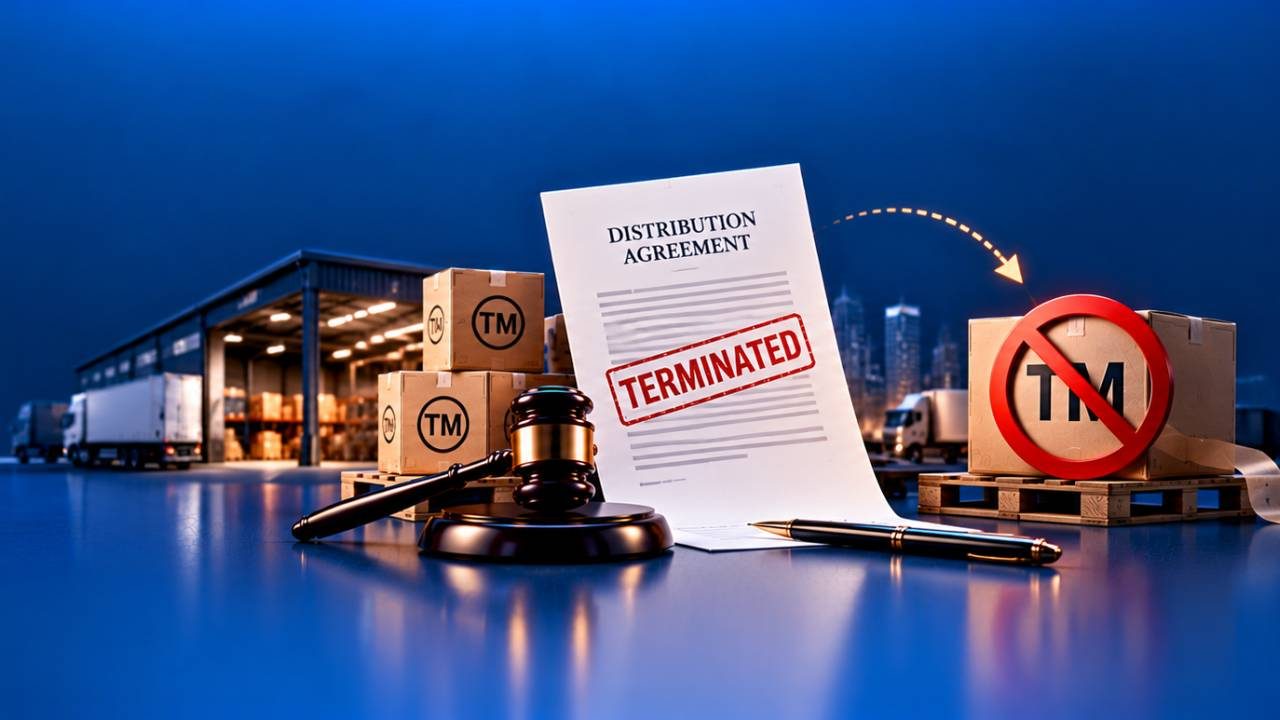
Generally, a former distributor cannot continue using a brand owner’s trademark as though the commercial relationship still exists after the distribution agreement has ended. However, the position depends on the nature of the permission originally granted, the terms of the agreement and the way the former distributor uses the mark after termination. Understanding Distributor Trademark Rights is important because the right to resell genuine products is not necessarily the same as the right to represent oneself as an authorised distributor or continue using another business’s brand identity.
Under Indian law, unauthorised trademark use after termination may amount to infringement or passing off. At the same time, a former distributor may have contractual or statutory arguments concerning genuine stock lawfully acquired before termination. These issues must be examined separately.
1. Does a Distributor Own the Brand’s Trademark?
A distributor usually receives permission to market and sell products bearing the manufacturer’s trademark. This permission does not automatically transfer ownership of the mark. The registered proprietor generally retains ownership and control over the brand. The distributor’s rights depend on the distribution agreement, any separate trademark licence and the nature of the commercial arrangement.
For example, a manufacturer may permit a distributor to display its logo on promotional material, use approved product photographs and identify itself as an authorised seller. Such permission is limited to the agreed business purpose. It does not normally allow the distributor to register the manufacturer’s mark in its own name, use it for unrelated products or continue presenting itself as an authorised representative after termination. The distinction between ownership and permitted use is central to resolving disputes after a distribution relationship ends.
2. What Happens to Trademark Permission After Termination?
When a distribution agreement expires or is validly terminated, the permission to use the brand owner’s trademark will generally end in accordance with the agreement. A former distributor should stop using the mark in ways which suggest an ongoing commercial relationship. This includes removing unauthorised branding from its website, social media accounts, business stationery, advertisements, storefronts and promotional material.
Continuing to use the manufacturer’s name as part of a business identity may also create confusion. Customers could believe the former distributor remains an authorised sales partner or is still connected with the manufacturer. The legal position is particularly clear where the agreement expressly requires the distributor to stop using all trademarks, logos and brand material after termination. However, even where the contract is silent, continued use may still violate the proprietor’s trademark rights if it creates a misleading commercial association.
3. What Does the Trade Marks Act, 1999 Say?
The Trade Marks Act, 1999 provides the statutory framework for protecting registered trademarks against unauthorised commercial use. Section 28 gives a registered proprietor exclusive rights to use the mark for the goods or services covered by registration, subject to the Act and any applicable limitations.
Section 29 deals with infringement. Under this provision, use of an identical or deceptively similar registered trademark by a person who is neither the proprietor nor a permitted user may amount to infringement in specified circumstances. Section 29(5) is particularly relevant where a former distributor continues using the mark as its business name or part of its trade name.
Section 30 recognises certain limitations on trademark rights. Section 30(3), for example, protects specified further dealings in goods lawfully acquired and placed on the market by the proprietor or with its consent. Section 30(4) preserves the proprietor’s ability to oppose further dealings where legitimate reasons exist, particularly where the condition of the goods has changed or been impaired.
The complete statutory framework is available in the official Trade Marks Act, 1999.
4. Can a Former Distributor Sell Existing Stock After Termination?
This is one of the most important practical questions in distributor disputes. Termination does not automatically mean every genuine product already purchased by the distributor must be destroyed or returned. Section 30(3) may protect the resale of genuine goods lawfully acquired and placed on the market by the proprietor or with its consent. The principle of exhaustion recognises certain resale rights after the goods have entered the market.
However, this statutory protection must be distinguished from the contractual obligations between the manufacturer and distributor. A distribution agreement may contain a stock return clause, a limited sell off period or restrictions on sales after termination. A breach of these terms may create contractual liability even where the resale does not independently amount to trademark infringement.
The proprietor may also have grounds to oppose further dealings under Section 30(4), particularly where goods have been altered, damaged or impaired. A former distributor should therefore review the agreement and the condition and source of its remaining stock before continuing sales.
5. Important Indian Judgments on Trademark Use After Termination
Indian courts have repeatedly recognised the importance of stopping unauthorised trademark use once a commercial relationship ends.
a) Helamin Technology Holding SA v. Haribansh Rai & Ors. (2015)
In this Delhi High Court decision, pronounced on 9 December 2015, the dispute concerned the HELAMIN trademark and a former commercial relationship involving the manufacture and distribution of products under the mark. The defendants had previously operated under an arrangement with the plaintiffs. After the relationship ended and supplies of HELAMIN products ceased, they continued using the mark and associated trade name.
The Court observed the distributor or licensee had no continuing right to use the proprietor’s trademark after termination. It emphasised the risk of misleading the public into believing the former commercial relationship remained in place. The Court granted interim protection against continued use of the mark. The decision demonstrates why a former distributor cannot claim independent ownership merely because it previously marketed the brand or developed commercial familiarity with it.
b) MCAM Surlon India Ltd. v. M/s Metalon Marketing Delhi Partnership Firm & Anr. (2024)
In this Delhi High Court decision, CS(COMM) 846/2023, dated 23 August 2024, MCAM Surlon had appointed the defendants as distributors for its engineering plastic products. The agreement permitted use of the METALON trademark during the commercial relationship.
After the agreement was terminated due to payment defaults, the defendants continued using METALON as part of their business identity. The Court found the distributor had no independent right to continue using the registered mark after termination.
Relying on Section 29 of the Trade Marks Act and earlier decisions, the Court granted an interim injunction restraining continued use of the mark for business and trade name purposes. The judgment is particularly relevant because it directly addresses the use of a manufacturer’s trademark by a former distributor after termination of a distribution agreement.
c) Tushar Saraff & Anr. v. Manish Kumar Jain & Ors. (2024)
The Calcutta High Court considered a dispute involving the JJ DELUXE trademark in an order dated 8 August 2024. The dispute concerned earlier agreements, manufacturing arrangements and permissions to use the mark. Following a breakdown in the commercial relationship, the parties disputed ownership and the scope of continued use.
The Court considered the earlier contractual arrangements and the risk of the defendants representing themselves as connected with the trademark proprietors. It observed an ex licensee generally cannot continue using a mark after the licence ends. If the termination is legally disputed, the former licensee’s remedy may lie in contractual proceedings or damages rather than continued unauthorised use. The Court granted an interim restraint against the relevant use of identical or deceptively similar marks. The decision illustrates how licensing arrangements, distribution relationships and ownership disputes can overlap.
6. Can a Former Distributor Use the Brand Name to Describe Genuine Products?
A former distributor may sometimes need to refer to a manufacturer’s trademark to identify genuine products still held in stock or previously sold. Such use is different from presenting itself as an authorised distributor. Section 30(1) permits certain uses of a registered mark to identify the proprietor’s goods or services, provided the use follows honest commercial practices and does not take unfair advantage of or harm the mark’s distinctive character or reputation.
For example, a former distributor may need to state the brand name when accurately describing a genuine product available for resale. However, it should not use the manufacturer’s logo in a manner suggesting current authorisation, official sponsorship or an ongoing partnership. The wording, placement and overall presentation of the mark matter. Clear statements about independent resale status may help avoid confusion, but they do not override contractual restrictions or other legal requirements.
7. What Legal Risks Arise From Continued Trademark Use?
Continued use after termination can expose a former distributor to several legal and commercial consequences. The proprietor may bring an infringement action under Section 29 or a passing off claim under Section 27(2), depending on the facts. A court may grant interim or permanent injunctions, damages, an account of profits and other relief under Section 135. An injunction may require the former distributor to stop using the mark on websites, packaging, advertisements and business documents.
There may also be contractual claims for breach of the distribution agreement. These claims are distinct from trademark infringement and can arise even where a particular resale is protected under the exhaustion provisions. Businesses concerned about unauthorised trademark infringement should therefore assess both the intellectual property rights and the contractual obligations involved before taking action.
8. How Can Brand Owners Protect Their Trademarks?
Brand owners should prepare distribution agreements with clear provisions governing trademark use. The agreement should identify permitted marks, approved promotional activities, authorised territories, product categories and quality standards. It should also specify what happens when the relationship ends. The termination provisions should address removal of signage, return of promotional material, access to digital accounts, use of business names and treatment of unsold inventory.
An effective exit process is equally important. The manufacturer should issue written termination confirmation, withdraw access to brand assets and monitor whether the former distributor continues presenting itself as an authorised partner. Where misuse continues, preserve evidence before sending notices. Relevant material may include website captures, advertisements, invoices, product photographs and customer communications.
Why Legal Advice Matters in Distributor Trademark Disputes
Disputes after termination often involve both contract interpretation and intellectual property rights. A former distributor may have a legitimate claim concerning outstanding payments, termination procedure or remaining stock. However, these issues do not automatically create a continuing right to use the manufacturer’s trademark. Engaging trademark litigation lawyers can help brand owners and distributors understand the scope of permitted use, assess infringement risks and determine suitable remedies. Early legal review is especially valuable where the agreement contains unclear exit provisions or the parties dispute the validity of termination.
Conclusion
A former distributor generally cannot continue using a manufacturer’s trademark as though the commercial relationship remains active. The right to sell genuine goods and the right to represent oneself as an authorised distributor are legally distinct. Indian law protects registered trademark owners against unauthorised use while recognising limited rights relating to genuine goods lawfully acquired and placed on the market. Clear contractual provisions, documented termination procedures and timely legal action can help prevent disputes and protect the value of a brand.
Frequently Asked Questions (FAQs)
Can a former distributor continue using a manufacturer's trademark after termination?
Generally, no. Once the permission to use the mark ends, continued commercial use may amount to infringement or passing off, particularly where it suggests an ongoing relationship with the proprietor.
Can a former distributor sell genuine products after termination?
Potentially, yes. Section 30(3) may protect certain resale of genuine goods lawfully acquired and placed on the market by the proprietor or with its consent. Contractual stock restrictions and Section 30(4) must also be considered.
Can a distributor register the manufacturer's trademark in its own name?
A distributor does not acquire ownership merely through authorised use. An application made without the proprietor’s authority may be challenged, depending on the facts and applicable provisions of the Act.
Can a former distributor use the brand name on its website?
It should not use the mark in a way which suggests current authorisation or affiliation. Limited factual references to genuine products may be permissible in appropriate circumstances, subject to honest commercial practices and contractual restrictions.
What happens if the distributor believes the termination was unlawful?
The distributor may pursue contractual remedies, including damages where legally justified. However, a disputed termination does not automatically authorise continued use of the proprietor’s trademark while the contractual dispute remains unresolved.
Can a brand owner seek an injunction against a former distributor?
Yes. Where the legal requirements are satisfied, the proprietor may seek an interim or permanent injunction under the Trade Marks Act to restrain unauthorised use.
Should a distribution agreement contain a trademark termination clause?
Yes. It should clearly explain when trademark permission ends, how remaining stock will be handled, when brand material must be removed and what obligations continue after termination.