
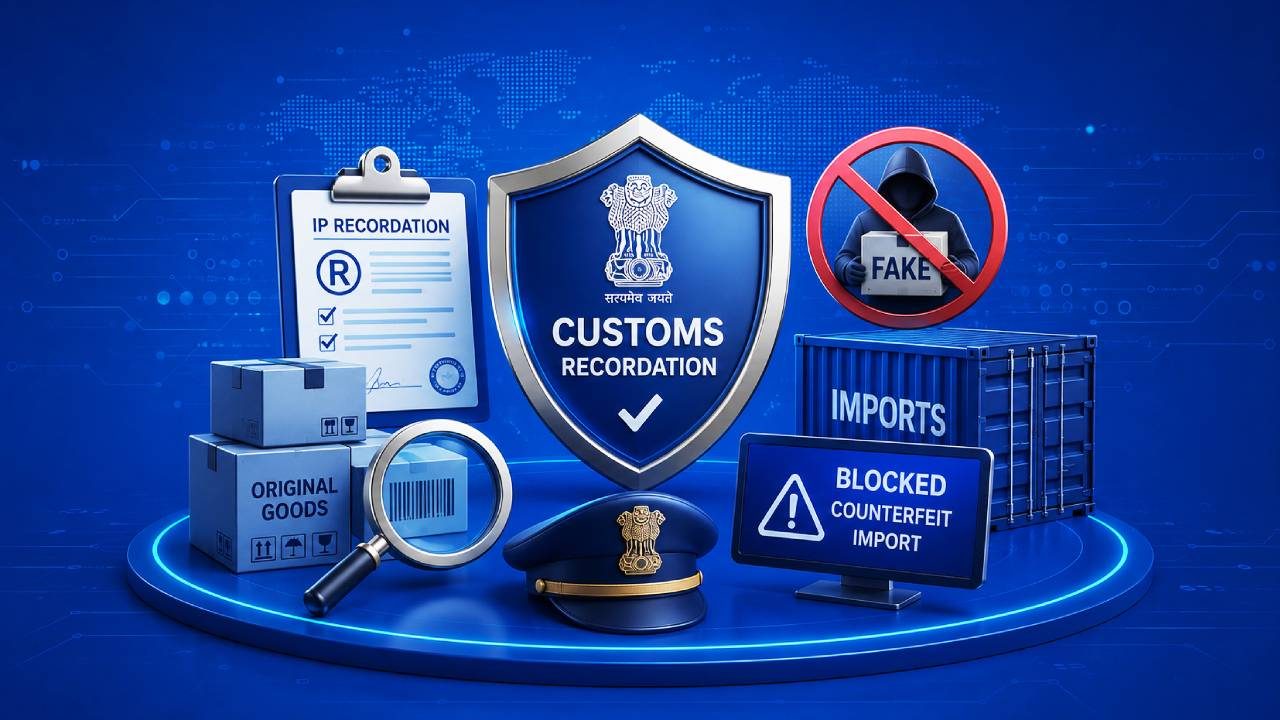
Counterfeit products continue to pose a serious threat to businesses, consumers, and the economy. From luxury goods and pharmaceuticals to electronics and automotive parts, fake products enter markets through various channels, causing significant financial and reputational damage. One of the most effective mechanisms available to intellectual property owners for tackling this issue is customs recordation in India. By enabling customs authorities to identify and detain suspected counterfeit goods at the border, this system plays a crucial role in protecting trademark rights and preventing unlawful imports.
As global trade expands and online marketplaces create new distribution networks, brand owners must adopt proactive enforcement strategies. Customs recordation offers an important first line of defence against counterfeit imports before they reach consumers.
Understanding Customs Recordation in India
Customs recordation in India refers to the process through which intellectual property rights holders register their trademarks, copyrights, patents, or designs with Indian Customs authorities. Once recorded, customs officials can monitor imports and take action against goods suspected of infringing registered intellectual property rights. The legal framework for customs recordation is primarily governed by the Intellectual Property Rights (Imported Goods) Enforcement Rules, 2007, issued under the Customs Act, 1962. These rules empower customs authorities to suspend the clearance of imported goods suspected of violating intellectual property rights. The objective is simple. Instead of waiting for counterfeit products to enter the market and then initiating enforcement actions, rights holders can stop infringing goods at the border itself.
Why Counterfeit Imports Are a Growing Concern
India is one of the world’s largest consumer markets and a major trading hub. While increased trade creates economic opportunities, it also presents challenges in controlling counterfeit products. Counterfeit imports can lead to substantial revenue losses for legitimate businesses. Consumers may unknowingly purchase fake products believing them to be genuine. In sectors such as pharmaceuticals, food products, automotive components, and electronics, counterfeit goods may even create serious health and safety risks. The rise of cross border e commerce has further complicated enforcement efforts. Counterfeiters frequently use multiple shipping routes, smaller consignments, and sophisticated packaging methods to avoid detection. As a result, border enforcement has become an essential component of intellectual property protection.
Legal Framework Governing Customs Recordation
India’s customs recordation regime is supported by a combination of domestic laws and international obligations. The Customs Act, 1962 grants authorities powers to prohibit the import of goods violating intellectual property rights. The Intellectual Property Rights (Imported Goods) Enforcement Rules, 2007 establish procedures for registration, detention, examination, and seizure of suspected counterfeit products. India’s obligations under the World Trade Organisation’s Agreement on Trade Related Aspects of Intellectual Property Rights also encourage member nations to provide effective border measures against counterfeit and pirated goods. Together, these provisions create a robust framework for combating infringing imports.
How the Customs Recordation Process Works
The customs recordation process involves several stages designed to assist rights holders and customs authorities in identifying counterfeit goods efficiently. A rights holder must first submit an application to the Indian Customs authorities through the designated intellectual property rights recordation system. The application generally includes details of the registered intellectual property, ownership documents, product descriptions, and information useful for identifying genuine and counterfeit goods. Customs authorities examine the application and verify the validity of the intellectual property rights. Upon approval, the rights are recorded in the customs database. Once the registration is active, customs officers can compare incoming consignments with recorded intellectual property information. If a shipment appears suspicious, customs may suspend clearance and notify the rights holder. The rights holder is then given an opportunity to inspect the goods and confirm whether infringement has occurred. If the goods are found to be counterfeit, customs authorities can seize and dispose of them in accordance with applicable laws.
Benefits of Customs Recordation for Brand Owners
Customs recordation provides several practical and strategic advantages for businesses seeking to protect their intellectual property.
1. Early Detection of Counterfeit Goods
One of the biggest advantages is early intervention. Counterfeit goods can be stopped before entering domestic markets, reducing the risk of consumer exposure and brand damage.
2. Cost Effective Enforcement
Litigation and market enforcement actions can be expensive and time consuming. Border enforcement often helps prevent large scale infringement without extensive court proceedings.
3. Protection of Brand Reputation
Consumer trust is a valuable business asset. Preventing counterfeit products from reaching customers helps maintain brand integrity and customer confidence.
4. Stronger Enforcement Network
Customs authorities become active partners in intellectual property protection. This creates an additional layer of enforcement beyond civil and criminal remedies.
5. Valuable Intelligence Gathering
Detentions and seizures often reveal information about counterfeit supply chains, importers, and distribution networks. Such intelligence can support broader enforcement strategies.
Role of Customs Authorities in Preventing Counterfeit Imports
Indian Customs officers play a vital role in enforcing intellectual property rights at the border. Their responsibilities extend beyond routine customs inspections. Officers receive information provided by rights holders during the recordation process. Product identification guides, packaging samples, authentication features, and training materials assist customs officials in recognising suspicious consignments. When potentially infringing goods are identified, customs authorities can suspend clearance, conduct inspections, and coordinate with rights holders to determine whether infringement exists. The success of customs recordation largely depends on effective collaboration between intellectual property owners and customs officials.
Best Practices for Effective Customs Recordation
Businesses should approach customs recordation as part of a broader anti counterfeiting strategy rather than a standalone measure. Rights holders should ensure their trademarks and other intellectual property rights are properly registered before seeking customs recordation. Accurate product descriptions and identification materials improve the likelihood of successful enforcement. Regular communication with customs authorities can also enhance effectiveness. Many successful brands provide periodic updates regarding new products, packaging modifications, and emerging counterfeit trends. Companies facing persistent counterfeiting concerns often work closely with an experienced anti counterfeiting litigation lawyer to develop comprehensive enforcement programmes involving customs, police, and civil remedies.
Challenges in Customs Enforcement
While customs recordation offers significant benefits, certain practical challenges remain. Counterfeiters continuously adapt their methods to avoid detection. They may use misleading product descriptions, route shipments through multiple jurisdictions, or divide consignments into smaller packages. The increasing volume of international trade also places pressure on customs authorities. Inspecting every shipment is impossible, making risk based targeting essential. Additionally, rights holders must remain actively involved in enforcement efforts. Delays in responding to customs notifications may affect the effectiveness of detention procedures. Despite these challenges, customs recordation remains one of the most efficient tools available for combating counterfeit imports.
Importance of Government Initiatives and Regulatory Support
India has made considerable efforts to strengthen intellectual property enforcement and border protection mechanisms. Government agencies continue to improve digital systems, customs training programmes, and enforcement coordination. Brand owners can access information regarding customs procedures and intellectual property enforcement through the official portals of the Central Board of Indirect Taxes and Customs (CBIC), the Indian Customs Electronic Gateway, and the Office of the Controller General of Patents, Designs and Trade Marks. Such initiatives demonstrate India’s commitment to creating a stronger intellectual property ecosystem and encouraging legitimate trade.
Customs Recordation as Part of a Comprehensive IP Protection Strategy
While customs recordation is highly effective, it should not be viewed as a complete solution. Successful intellectual property protection requires a combination of preventive and enforcement measures. Businesses should combine customs recordation with trademark registrations, market investigations, online monitoring, civil enforcement actions, and criminal complaints where appropriate. Many companies also seek guidance from top rated IP lawyers to design enforcement programmes tailored to industry specific risks and counterfeiting patterns. An integrated approach significantly improves the ability to detect, prevent, and eliminate counterfeit activities across multiple channels.
Conclusion
Counterfeit imports remain a significant challenge for businesses operating in India. The growing complexity of international trade and e commerce has made proactive intellectual property protection more important than ever. Customs recordation in India provides rights holders with a powerful mechanism to prevent counterfeit goods from entering the country. By enabling customs authorities to identify, detain, and seize infringing products at the border, the system helps protect brands, consumers, and legitimate commerce. Businesses investing in intellectual property protection should consider customs recordation as a critical component of their enforcement strategy. When combined with trademark registration, market surveillance, and legal enforcement measures, customs recordation can substantially reduce the risks posed by counterfeit imports and strengthen long term brand protection.
Frequently Asked Questions (FAQ)
What is customs recordation in India?
Customs recordation in India is a process through which intellectual property rights holders register their rights with customs authorities to enable border enforcement against counterfeit and infringing imports.
Which intellectual property rights can be recorded with Indian Customs?
Trademark rights, copyrights, patents, and registered designs can generally be recorded under the Intellectual Property Rights (Imported Goods) Enforcement Rules, 2007.
Why is customs recordation important for brand owners?
It helps prevent counterfeit products from entering the Indian market, protects brand reputation, reduces enforcement costs, and strengthens intellectual property protection.
How long does customs recordation remain valid?
The validity period generally corresponds with the duration of the registered intellectual property right or the period prescribed under applicable regulations.
Can customs authorities seize counterfeit goods without a court order?
Yes. Customs authorities have powers under the applicable rules to suspend clearance and take enforcement action against suspected counterfeit imports after following prescribed procedures.