
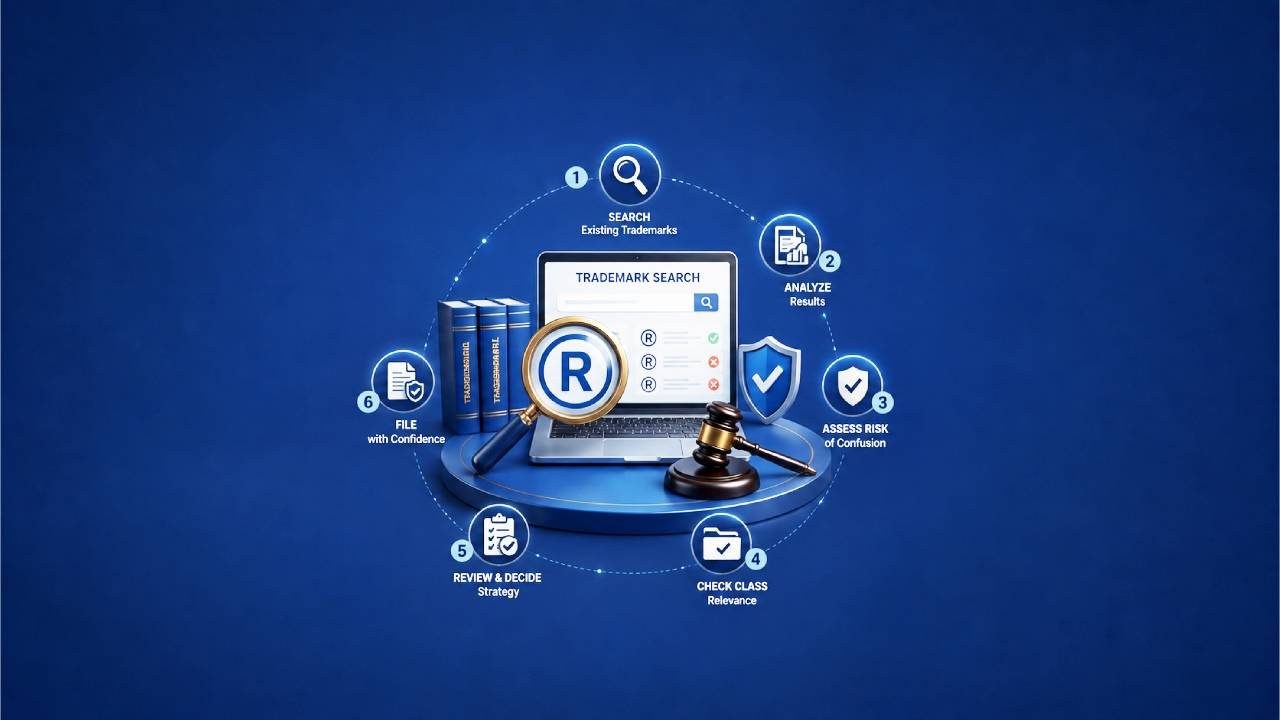
Choosing a brand name is an exciting step for any business. However, filing a trademark application without checking whether the mark is available can lead to objections, legal disputes, and unnecessary expenses. A Trademark Availability Search helps businesses identify possible conflicts before investing time and money in registration.
A thorough search provides valuable insight into existing registered and pending trademarks. It also helps businesses assess legal risks, strengthen their branding strategy, and improve the chances of successful registration. Whether you are a start up, an established company, or an individual entrepreneur, conducting a Trademark Availability Search before filing is an essential part of protecting your intellectual property.
What Is a Trademark Availability Search?
A Trademark Availability Search is a process of examining existing trademark records to determine whether a proposed trademark is already registered, pending registration, or likely to conflict with another mark. The search includes identical as well as deceptively similar trademarks covering relevant goods and services. The objective is not simply to confirm whether an identical mark exists. It also involves identifying similar names, logos, words, phonetic variations, and visual similarities which may create confusion among consumers. A comprehensive search reduces legal uncertainty and allows applicants to make informed decisions before filing a trademark application.
Why Is a Trademark Availability Search Important Before Filing?
A trademark application may face objections if an earlier trademark already exists for similar goods or services. Conducting a search before filing offers several advantages. It helps avoid rejection of the application on relative grounds. It reduces the possibility of infringement claims from existing trademark owners. It saves legal costs associated with disputes and rebranding. It allows businesses to choose a stronger and more distinctive brand identity. It improves confidence during investment, licensing, expansion, and marketing activities. Many businesses spend significant resources promoting a brand before confirming its legal availability. Discovering conflicts after launching a product often results in expensive rebranding exercises. A proper search helps prevent such situations.
Legal Basis for Trademark Searches in India
Trademark registration in India is governed by the Trade Marks Act, 1999 and the Trade Marks Rules, 2017. Although the law does not make a Trademark Availability Search mandatory, it is considered an essential due diligence exercise before filing. The Indian Trade Marks Registry maintains a searchable public database where applicants can review existing trademark records. Businesses can also refer to official guidance available on the IP India website and relevant information published by the Controller General of Patents, Designs and Trade Marks (CGPDTM).
Types of Trademark Availability Searches
Different searches serve different purposes depending on the nature of the proposed trademark.
1. Identical Trademark Search
This search identifies trademarks which exactly match the proposed word or phrase. It is the first step in assessing availability.
2. Similar Trademark Search
This involves searching for trademarks with similar spellings, pronunciation, appearance, or commercial impression. Trademark examiners consider similarity, not merely exact identity.
3. Device Mark Search
Businesses intending to register logos should conduct image or device mark searches based on the Vienna Classification system.
4. Class Based Search
Trademark protection is granted for specific classes of goods and services under the Nice Classification. Applicants must search relevant classes before filing.
5. Common Law Search
Registered trademarks are not the only concern. Businesses should also examine unregistered trademarks used in the marketplace through company websites, domain names, trade directories, social media platforms, and commercial databases.
Step by Step Process to Conduct a Trademark Availability Search
Step One: Finalise Your Proposed Trademark
Select the word, logo, slogan, or combination you intend to register. Distinctive and invented words generally receive stronger legal protection than descriptive or generic terms.
Step Two: Identify the Correct Trademark Class
Every trademark application must specify the goods or services for which protection is sought. India follows the Nice Classification system comprising forty five classes. Selecting the correct class is important because similar trademarks may coexist in unrelated industries, while conflicts within the same or closely related classes often lead to objections. Applicants may verify classification guidance through the official IP India portal.
Step Three: Search the Official Trademark Database
Use the online public search facility provided by the Trade Marks Registry. Search using multiple combinations, including exact spellings, phonetic variations, abbreviations, singular and plural forms, and alternative spellings. A broad search often reveals potential conflicts which may not appear through an exact word search alone.
Step Four: Review Similar Trademarks Carefully
Finding another trademark does not automatically prevent registration. Analyse several factors before reaching a conclusion.
- Consider visual similarity.
- Compare pronunciation.
- Assess conceptual meaning.
- Review goods or services covered.
- Check application status.
- Determine whether consumers may confuse both marks.
Professional legal assessment becomes valuable during this stage because trademark similarity involves legal interpretation rather than simple word comparison.
Step Five: Check Marketplace Use
A trademark search should extend beyond official records. Review search engines, business directories, domain name registrations, company names, online marketplaces, and social media platforms. An unregistered trademark with strong commercial reputation may still create legal complications through passing off claims.
Step Six: Evaluate Legal Risk
After gathering search results, assess whether your proposed trademark carries low, moderate, or high registration risk. If significant conflicts appear, selecting an alternative trademark before filing often proves more economical than defending objections later.
Common Mistakes Businesses Make During Trademark Searches
Many applicants rely only on exact word searches. This approach overlooks similar sounding marks which frequently become grounds for refusal. Another common mistake involves searching only one trademark class. Related classes may also influence examination if consumers are likely to associate products or services with the same source. Businesses also ignore logo searches when branding includes distinctive graphical elements. Some applicants fail to investigate existing marketplace use outside official trademark records. Another error involves assuming company name registration automatically provides trademark rights. Company registration and trademark registration operate under different legal frameworks.
How Trademark Examiners Assess Similarity
Trademark examiners evaluate several factors while reviewing applications. Visual appearance plays a significant role, especially where spellings closely resemble existing marks. Phonetic similarity is equally important because consumers often remember names based on pronunciation rather than spelling. Conceptual similarity also matters. Two trademarks conveying the same commercial idea may still create confusion even with different words. The nature of goods and services, purchasing behaviour of consumers, trade channels, and overall commercial impression also influence examination.
Benefits of Conducting a Professional Trademark Availability Search
Although businesses may conduct basic searches independently, professional searches provide a deeper level of analysis. Experienced trademark professionals interpret legal risks based on examination practice and judicial decisions rather than database results alone. Professional searches often include phonetic analysis, device mark searches, common law searches, international database reviews where relevant, and legal opinions regarding registrability. Businesses planning international expansion may also consider International trademark filing and registration after securing suitable protection within India. For complex branding strategies or valuable intellectual property portfolios, guidance from best trademark lawyers in India helps minimise filing risks and develop long term protection strategies.
Government Resources for Trademark Searches
India offers several official resources which improve transparency during trademark registration. Applicants can access the Public Search facility available through the Intellectual Property India portal to review registered and pending trademarks. The Trade Marks Act, 1999 and Trade Marks Rules, 2017 are also publicly available through official government resources, allowing businesses to understand applicable legal provisions before filing. Using official government databases ensures reliable and current information during the search process.
What Happens If a Similar Trademark Is Found?
Finding a similar trademark does not always mean registration is impossible. The outcome depends upon the degree of similarity, nature of goods or services, commercial impression, reputation of the earlier trademark, and likelihood of consumer confusion. Sometimes minor modifications to the proposed trademark significantly improve registrability. In other cases, selecting a completely new brand may provide stronger long term protection while avoiding costly legal disputes. Making informed decisions before filing remains far less expensive than responding to examination reports or defending infringement proceedings later.
Conclusion
A Trademark Availability Search is one of the most important steps before filing a trademark application. It helps businesses identify potential conflicts, reduce legal risks, and protect valuable brand assets from the beginning. A well conducted search goes beyond locating identical trademarks. It includes similar marks, logos, phonetic variations, relevant trademark classes, and existing marketplace use. This broader approach improves filing confidence and supports stronger brand protection. Businesses investing in long term growth should treat trademark searches as an essential part of intellectual property planning rather than a procedural formality. Careful preparation before filing often saves considerable time, expense, and legal complications in future.
Frequently Asked Questions (FAQs)
What is a Trademark Availability Search?
A Trademark Availability Search examines existing trademark records to determine whether a proposed trademark is available for registration without conflicting with earlier rights.
Is a Trademark Availability Search mandatory in India?
No. It is not legally mandatory. However, it is strongly recommended because it reduces the risk of objections and infringement disputes.
Can I conduct a trademark search myself?
Yes. Applicants may search the official IP India database. However, professional legal analysis provides a more comprehensive assessment of potential risks.
How long does a Trademark Availability Search take?
A basic online search may take only a few minutes. A comprehensive legal search involving multiple databases and analysis may take one or two business days.
What happens if my trademark resembles an existing trademark?
Your application may receive an examination objection or face opposition from the earlier trademark owner if confusion is likely.