

The Types of Intellectual Property Rights recognised in India form the backbone of legal protection for creativity, innovation and commercial identity. Intellectual property rights safeguard intangible assets such as inventions, brand names, artistic works and confidential information. In a rapidly evolving knowledge economy, understanding the different types of intellectual property rights in India is essential for businesses, creators, researchers and entrepreneurs seeking legal certainty and commercial value. India follows a comprehensive statutory framework aligned with international conventions administered by bodies such as the World Intellectual Property Organization. These laws ensure protection, enforcement and monetisation of intellectual assets across sectors.
Understanding Intellectual Property Rights in the Indian Legal Framework
Intellectual property rights in India are governed by a combination of statutes, rules and judicial interpretations. Each form of intellectual property has its own legal regime, registration authority and enforcement mechanism. Together, these rights encourage innovation, protect consumer trust and support economic development. Indian IP laws comply with global standards under international treaties such as TRIPS while reflecting domestic policy priorities. Regulatory oversight is exercised through bodies like Intellectual Property India, which administers patents, trademarks, designs and geographical indications.
Types of Intellectual Property Rights in India Explained
The Indian legal system recognises several distinct forms of intellectual property rights. Each serves a different purpose and protects a specific category of intellectual output.
1. Patents: Protection for Inventions
Patents protect new inventions which involve an inventive step and are capable of industrial application. Under the Patents Act, 1970, a patent grants exclusive rights to the inventor to prevent others from making, using, selling or importing the patented invention for a fixed period, usually twenty years. Patents are commonly used to protect technological innovations in fields such as pharmaceuticals, engineering, electronics and biotechnology. Registration is mandatory to enforce patent rights. Once granted, a patent becomes a valuable commercial asset capable of licensing, assignment or technology transfer. Patent rights strike a balance between rewarding innovation and ensuring public access after the protection period expires.
2. Trademarks: Protecting Brand Identity
Trademarks safeguard symbols, words, logos, slogans and other identifiers that distinguish goods or services of one entity from another. Governed by the Trade Marks Act, 1999, trademarks protect brand reputation and consumer trust. A registered trademark grants exclusive rights to use the mark and to take legal action against infringement or passing off. While registration is not mandatory to claim rights, it significantly strengthens enforcement and evidentiary value. In the middle of trademark protection strategy, businesses often seek guidance from the best intellectual property (IP) law firm in India to ensure proper filing, monitoring and enforcement of trademark portfolios.
3. Copyright: Protecting Creative Expression
Copyright protects original literary, artistic, musical and dramatic works, as well as cinematograph films, sound recordings and software. The Copyright Act, 1957 governs copyright protection in India.
Unlike patents and trademarks, copyright protection arises automatically upon creation of the work. Registration is optional but useful for evidentiary purposes. Copyright grants the author exclusive rights to reproduce, distribute, adapt and communicate the work to the public. Copyright law also recognises limitations such as fair dealing, which balance creators’ rights with public interest.
4. Industrial Designs: Protecting Aesthetic Features
Industrial design rights protect the visual appearance of an article, including shape, configuration, pattern or ornamentation. These rights are governed by the Designs Act, 2000. Design protection focuses on aesthetic appeal rather than technical functionality. Registration is mandatory to claim design rights. Once registered, the design owner can prevent unauthorised copying or imitation of the registered design. Industries such as fashion, consumer goods, packaging and furniture rely heavily on design protection to maintain market distinctiveness.
5. Geographical Indications: Protecting Regional Identity
Geographical indications protect products that originate from a specific geographical location and possess qualities, reputation or characteristics attributable to that location. The Geographical Indications of Goods Act, 1999 governs GI protection in India. Examples include agricultural products, handicrafts and food items whose identity is linked to regional heritage. GI protection prevents misuse and ensures that only authorised producers can use the registered indication. This form of intellectual property plays a crucial role in preserving traditional knowledge and supporting rural economies.
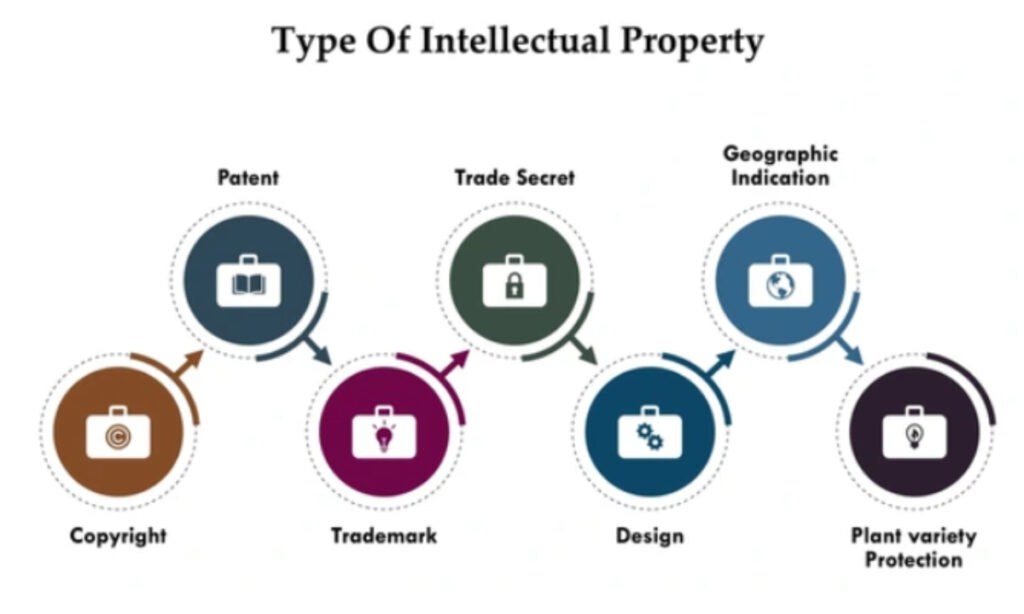
Trade Secrets and Confidential Information
Trade secrets protect confidential business information that provides a competitive advantage. This includes formulas, processes, methods, client data and strategies. India does not have a specific statute governing trade secrets. Protection arises through contractual obligations, confidentiality agreements and principles of equity. Businesses must take reasonable measures to maintain secrecy to claim protection.
Trade secrets are particularly valuable for information that does not qualify for patent protection or where secrecy is commercially preferable.
Plant Variety Protection
Plant varieties are protected under the Protection of Plant Varieties and Farmers’ Rights Act, 2001. This legislation balances the rights of breeders with the interests of farmers. Registered plant varieties receive exclusive rights over production, sale and distribution. At the same time, farmers retain rights to save, use and exchange seeds, subject to statutory limits. This specialised IP regime supports agricultural innovation while safeguarding traditional farming practices.
Layout Designs of Integrated Circuits
Layout designs of integrated circuits are protected under the Semiconductor Integrated Circuits Layout-Design Act, 2000. This form of protection covers the three-dimensional configuration of electronic circuits.
Registration is required to enforce rights. Protection helps prevent unauthorised reproduction and commercial exploitation of registered layouts. Although niche, this category is important for the electronics and semiconductor industries.
Importance of Choosing the Right Type of Intellectual Property Protection
Selecting the appropriate form of intellectual property protection depends on the nature of the asset, commercial objectives and duration of protection required. In many cases, businesses use a combination of IP rights to protect different aspects of the same product or service. For cross-border protection and strategic planning, organisations often consult International IP Law firm and lawyers to align domestic filings with global expansion strategies.
Enforcement and Commercialisation of Intellectual Property Rights
Effective enforcement ensures that intellectual property rights deliver real value. Indian law provides civil and criminal remedies against infringement, including injunctions, damages and seizure of infringing goods. Beyond enforcement, intellectual property can be monetised through licensing, assignment, franchising and technology transfer. A structured IP strategy enhances valuation during investments, mergers or acquisitions.
Conclusion
The Types of Intellectual Property Rights recognised in India provide a structured legal framework to protect innovation, creativity and commercial identity. Each category serves a distinct purpose, and together they form a comprehensive system supporting economic growth and competitive markets. Understanding and strategically using these rights enables individuals and businesses to secure legal protection, maximise asset value and sustain long-term success in an increasingly knowledge-driven economy.
Frequently Asked Questions (FAQs)
1. What are intellectual property rights in simple terms?
Intellectual property rights are legal rights that protect creations of the mind such as inventions, brand names, artistic works and confidential business information.
2. Is registration mandatory for all types of intellectual property in India?
No. Registration is mandatory for patents, trademarks, designs and geographical indications. Copyright arises automatically, while trade secrets rely on confidentiality measures.
3. Can one product be protected under multiple IP laws?
Yes. A product may be protected by patents for technology, trademarks for branding, designs for appearance and copyright for creative elements.
4. How long do intellectual property rights last in India?
Duration varies by type. Patents last twenty years, trademarks are renewable every ten years, copyrights usually last for the author’s lifetime plus sixty years, and designs last up to fifteen years.
5. Why are intellectual property rights important for businesses?
They protect innovation, enhance brand value, prevent unfair competition and create opportunities for commercialisation and investment.