Counterfeiting has become one of the most serious threats facing businesses across industries. Fake products damage brand reputation, reduce customer trust, create financial losses, and expose consumers to significant safety risks. In many cases, businesses identify counterfeit goods but struggle to secure successful legal action because of poor Evidence Preservation practices. Courts rely on credible and legally admissible evidence. Without proper documentation and secure handling of records, even a strong infringement claim may become difficult to prove.
Effective Evidence Preservation begins from the moment a business suspects infringement. Every document, product sample, photograph, invoice, communication, and digital record can play a vital role during civil litigation, criminal prosecution, customs enforcement, or administrative proceedings. Businesses that establish a structured evidence preservation process are better prepared to protect their intellectual property rights and achieve favourable legal outcomes.
Why Evidence Preservation Matters in Anti Counterfeiting Cases
Counterfeiting litigation depends heavily on factual evidence. Courts require businesses to demonstrate ownership of intellectual property, prove infringement, establish the origin of counterfeit goods, and quantify financial losses. Poor handling of evidence often creates unnecessary legal challenges. Missing invoices, altered digital files, damaged product samples, or incomplete records may weaken a claim. Proper evidence preservation ensures information remains authentic, reliable, and legally admissible throughout legal proceedings. Businesses should also remember evidence may be required during investigations conducted by police authorities, customs officials, private investigators, and intellectual property enforcement agencies. Well organised records allow authorities to respond more efficiently and strengthen enforcement efforts.
Understanding the Types of Evidence in Counterfeiting Litigation
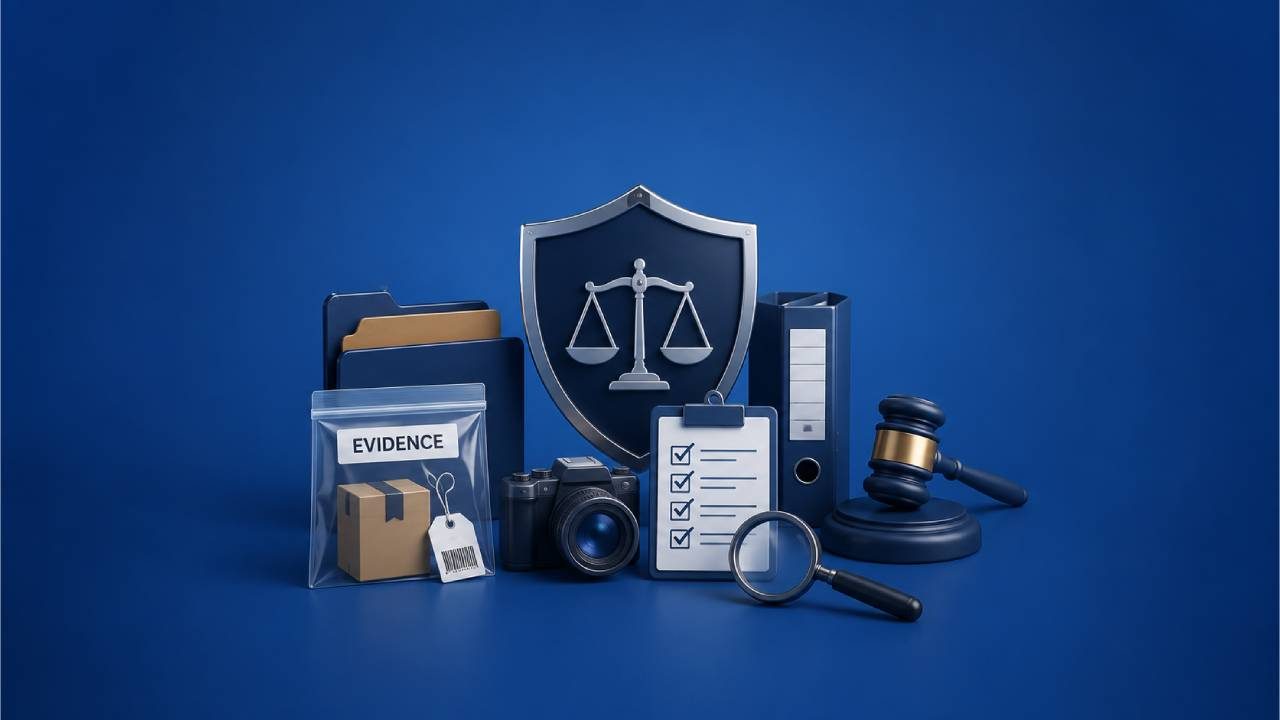
Successful anti counterfeiting litigation depends on collecting different categories of evidence rather than relying upon a single document or product sample. Important evidence often includes:
- Registration certificates for trademarks, copyrights, patents, and designs
- Original product samples
- Counterfeit product samples
- Purchase invoices
- Bills and receipts
- Packaging materials
- Labels and barcodes
- Marketing materials
- Product catalogues
- Distribution agreements
- Online marketplace listings
- Website screenshots
- Social media advertisements
- Customer complaints
- Warehouse inspection reports
- Investigation reports
- Customs seizure documents
- Laboratory reports where product safety becomes an issue
- Financial records showing commercial losses
Each piece contributes towards establishing a complete picture of infringement.
Begin Evidence Preservation as Soon as Counterfeiting Is Suspected
One of the most common mistakes businesses make is delaying evidence collection until legal proceedings begin. Evidence may disappear quickly. Counterfeit sellers frequently change business names, remove online listings, destroy records, or relocate inventory. Digital evidence may also be deleted within hours.
Businesses should immediately secure:
- Original products for comparison.
- Counterfeit products purchased through authorised investigators or controlled test purchases.
- Screenshots showing product listings, seller details, pricing, customer reviews, and product descriptions.
- Transaction records including payment confirmations and delivery information.
- Communication exchanged with counterfeit sellers wherever available.
Early evidence preservation significantly improves litigation strategy and reduces the risk of losing valuable proof.
Preserve the Chain of Custody
Courts place considerable importance on the integrity of evidence. Businesses should establish a clear chain of custody from collection until production before the court.
Every transfer of physical evidence should be documented carefully. Records should include:
- Date of collection
- Name of collector
- Location
- Description of evidence
- Storage location
- Details of every person handling the evidence
Maintaining proper custody records demonstrates evidence has not been altered or tampered with during investigation.
Preserve Digital Evidence Correctly
Counterfeiters increasingly operate through ecommerce platforms, social media channels, messaging applications, and independent websites. Digital evidence has therefore become essential in modern intellectual property litigation.
Businesses should preserve:
- Website pages.
- Product listings.
- Source URLs.
- Seller profiles.
- Customer feedback.
- Digital advertisements.
- Email communications.
- Payment confirmations.
- Order histories.
- Video recordings where applicable.
Businesses should save files in their original formats whenever possible while maintaining metadata. Timestamped screenshots provide additional support but should not replace original digital files.
Regular backups reduce the risk of accidental deletion.
Conduct Professional Market Investigations
Private investigations often provide valuable evidence before commencing legal action. Experienced investigators may identify:
- Manufacturing facilities.
- Storage warehouses.
- Distribution networks.
- Retail outlets.
- Import channels.
- Supply chains.
- Online operators.
Businesses should maintain complete investigation reports supported by photographs, purchase records, surveillance records where legally permissible, and witness statements. Investigation reports often become valuable supporting evidence during litigation.
Preserve Original Product Samples
Original genuine products play an important role during anti counterfeiting litigation because courts frequently compare authentic goods with counterfeit products. Businesses should retain:
- Original packaging.
- Security labels.
- Authentication features.
- Serial numbers.
- Product manuals.
- Warranty cards.
- Quality control records.
- Manufacturing specifications.
These materials help establish clear distinctions between genuine and counterfeit products.
Maintain Proper Documentation of Intellectual Property Rights
Ownership remains the foundation of every infringement claim. Businesses should securely preserve:
- Trademark registration certificates.
- Copyright registrations.
- Patent certificates.
- Design registrations.
- Licence agreements.
- Assignment deeds.
- Renewal records.
User evidence demonstrating continuous commercial use. These records establish legal ownership and strengthen enforcement proceedings. Businesses should regularly update intellectual property portfolios to avoid gaps during litigation.
Record Commercial Losses
Courts often examine financial loss while determining damages or compensation. Businesses should preserve records relating to:
- Reduced sales.
- Customer complaints.
- Cancelled orders.
- Market surveys.
- Brand reputation studies.
- Dealer reports.
- Advertising expenditure.
- Corrective marketing campaigns.
Expert reports may also assist in quantifying commercial damage resulting from counterfeit activities.
Preserve Customs and Enforcement Records
Many counterfeit goods enter markets through international trade channels. Businesses should preserve all documents received during customs enforcement. Relevant records include:
- Detention notices.
- Seizure reports.
- Inspection reports.
- Photographs.
- Correspondence with customs authorities.
- Import documentation.
- Laboratory testing reports.
These documents often become significant evidence during subsequent litigation. Businesses may also refer to guidance available through the official website of the Central Board of Indirect Taxes and Customs for intellectual property border enforcement procedures and customs recordation requirements.
Train Employees on Evidence Preservation
Employees often become the first people to identify suspicious products. Sales teams, warehouse staff, distributors, customer service personnel, and compliance departments should understand basic evidence preservation procedures. Training should cover:
- How to identify counterfeit goods.
- How to preserve physical evidence.
- How to document customer complaints.
- How to report suspicious activity.
- How to protect confidential records.
Clear internal procedures reduce mistakes which may later affect litigation.
Work Closely with Legal Professionals
Counterfeiting cases frequently involve civil litigation, criminal proceedings, customs enforcement, online platform complaints, and administrative actions occurring simultaneously. Legal professionals help businesses determine which evidence carries maximum legal value, how evidence should be preserved, and when additional investigations become necessary. Many businesses seek guidance from the best anti counterfeiting attorneys during complex enforcement actions because experienced legal teams understand evidentiary standards required before different courts and enforcement authorities. Early legal advice often prevents procedural mistakes and improves litigation strategy.
Develop an Internal Evidence Preservation Policy
Businesses should not wait until infringement occurs before establishing internal procedures. An effective policy should define:
- Responsibilities of different departments.
- Methods for collecting evidence.
- Storage requirements.
- Digital backup procedures.
- Reporting timelines.
- Record retention periods.
- Coordination with investigators and legal counsel.
Regular policy reviews help businesses remain prepared for emerging counterfeiting techniques. Larger organisations often integrate evidence preservation within broader intellectual property compliance programmes.
Common Mistakes Businesses Should Avoid
Several errors frequently weaken anti counterfeiting litigation. These include delaying evidence collection, failing to preserve original digital records, relying only on screenshots, discarding counterfeit samples, maintaining incomplete investigation reports, poor documentation of chain of custody, and allowing multiple unauthorised individuals to handle evidence. Businesses should also avoid modifying files after collection because alterations may raise questions regarding authenticity. Careful planning reduces these risks considerably. Towards the later stages of enforcement planning, businesses also benefit from consulting the best IP law firm in India for comprehensive intellectual property protection strategies, litigation planning, and long term brand enforcement programmes.
Conclusion
Counterfeiting continues to evolve as criminals adopt increasingly sophisticated methods across physical and digital marketplaces. Businesses cannot rely solely on intellectual property registrations to protect their brands. Successful enforcement depends upon organised, timely, and legally compliant Evidence Preservation. Every document, product sample, investigation report, digital record, financial statement, and witness account contributes towards building a stronger legal case. Businesses that establish systematic evidence preservation practices improve their ability to secure injunctions, obtain damages, support criminal investigations, and prevent future infringement. Preparing before litigation begins remains one of the most effective investments any business can make in protecting its intellectual property and preserving long term brand value.
Frequently Asked Questions (FAQs)
What is Evidence Preservation in intellectual property litigation?
Evidence Preservation refers to the process of collecting, protecting, storing, and maintaining documents, digital records, product samples, and other materials required to prove intellectual property infringement before courts and enforcement authorities.
Why is evidence important in anti counterfeiting litigation?
Evidence establishes ownership of intellectual property rights, proves infringement, identifies counterfeit goods, demonstrates financial loss, and supports legal remedies including injunctions and damages.
What types of evidence should businesses preserve?
Businesses should preserve trademark certificates, invoices, counterfeit product samples, original products, packaging, website screenshots, investigation reports, digital communications, financial records, customer complaints, and customs documents.
How should businesses preserve digital evidence?
Digital evidence should be saved in its original format wherever possible, supported by timestamps, metadata, secure backups, and documented collection procedures to maintain authenticity.
What is the chain of custody?
The chain of custody records every stage of evidence handling from collection until presentation before a court. It helps prove evidence has remained secure and unaltered.