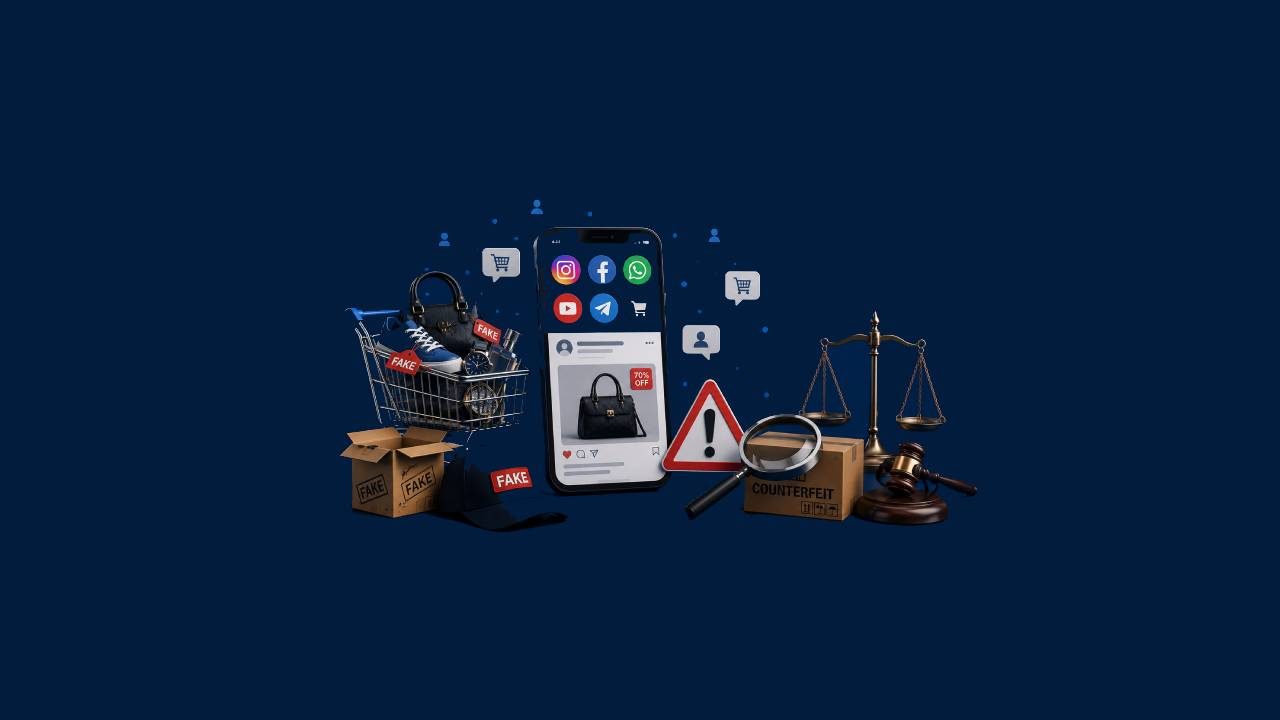
Social media has transformed the way businesses connect with consumers. Platforms once designed primarily for communication and content sharing have evolved into powerful digital marketplaces. While this shift has created significant opportunities for legitimate brands, it has also opened new avenues for counterfeiters. Today, counterfeit sales on social media have become a growing concern for businesses, regulators, and consumers across India. From fake luxury goods and cosmetics to counterfeit electronics and pharmaceuticals, unlawful sellers increasingly use social platforms to market and distribute infringing products.
The rapid growth of social commerce, combined with the ease of creating anonymous accounts and reaching large audiences, has made social media a preferred channel for counterfeit operations. As a result, brand owners face new challenges in protecting their intellectual property and maintaining consumer trust.
Counterfeit Sales on Social Media
The rise of counterfeit sales on social media reflects broader changes in consumer purchasing behaviour. Millions of consumers now discover products through social networking platforms, influencer content, live selling events, and targeted advertisements. This convenience has encouraged counterfeit sellers to establish a strong presence on these channels. Unlike traditional marketplaces, social media platforms allow sellers to engage directly with consumers through private messages, groups, stories, and live broadcasts. These features create an environment where counterfeit products can be promoted quickly and often with limited oversight. The combination of high visibility and low entry barriers has significantly increased the scale of counterfeit activity online.
The Growing Problem of Counterfeit Goods in India
India remains one of the fastest growing digital economies in the world. Increased smartphone usage, affordable internet access, and expanding digital payment systems have contributed to a surge in online shopping activity.
While these developments have benefited businesses and consumers, they have also created opportunities for counterfeit networks. Fake products now reach customers through a variety of online channels, including social media pages, private groups, messaging applications, and live commerce streams.
Counterfeiters target popular product categories such as fashion accessories, footwear, cosmetics, electronics, mobile accessories, health products, and luxury goods. Many consumers unknowingly purchase these products due to convincing advertisements and misleading representations.
Why Social Media Has Become a Preferred Channel for Counterfeiters
Several characteristics make social media platforms attractive to counterfeit sellers. The first is accessibility. Creating an account often requires minimal verification, allowing counterfeiters to establish multiple profiles with ease. If one account is removed, another can quickly replace it. The second factor is reach. Social media algorithms help content spread rapidly across large audiences. Counterfeit sellers can promote products through sponsored posts, viral videos, and influencer collaborations. Another important factor is anonymity. Many sellers avoid providing complete business information, making it difficult for consumers and rights holders to identify the individuals behind counterfeit operations. Direct communication tools further support counterfeit activities. Transactions frequently move from public posts to private messages where product details, payment arrangements, and delivery methods can be discussed without public scrutiny.
How Counterfeit Products Are Marketed on Social Media
Counterfeit sellers use sophisticated marketing techniques to attract buyers. Many create professional looking pages featuring product images copied from genuine brands. Some use misleading brand references, while others display counterfeit products alongside authentic marketing material. Influencer marketing has also become a significant concern. In some cases, influencers unknowingly promote counterfeit products supplied by sellers claiming to represent legitimate businesses. Live commerce sessions provide another avenue for counterfeit promotion. Sellers showcase products in real time, answer customer questions, and create urgency through limited time offers. These techniques often encourage impulse purchases. Short form video content has further increased the visibility of counterfeit goods. Viral trends and product demonstrations can expose counterfeit products to thousands of potential buyers within a matter of hours.
The Impact on Brand Owners
The growth of counterfeit sales through social media platforms creates substantial challenges for businesses. Financial losses remain one of the most immediate consequences. Every counterfeit sale may represent a lost opportunity for a legitimate brand. Over time, these losses can significantly affect revenue and market share. Brand reputation also suffers. Consumers who unknowingly purchase poor quality counterfeit products may associate negative experiences with the genuine brand. Counterfeit products often fail to meet expected quality standards. This can damage consumer confidence and weaken long term customer loyalty. Businesses must also allocate significant resources to monitoring social media channels, investigating infringing accounts, and pursuing enforcement actions. These efforts require continuous attention due to the rapidly changing nature of online platforms.
Risks Faced by Consumers
Consumers are often the most vulnerable victims of counterfeit sales on social media. Many counterfeit products are manufactured without adherence to safety regulations or quality standards. This can create serious health and safety concerns, particularly in sectors such as cosmetics, pharmaceuticals, food products, and electronics. Consumers may also experience financial losses when products fail to perform as advertised or when sellers disappear after receiving payment. Unlike purchases from established retailers, transactions conducted through informal social media channels often provide limited recourse for refunds or dispute resolution. The lack of transparency surrounding many social media sellers makes it difficult for consumers to verify product authenticity before making a purchase.
Intellectual Property Challenges in the Digital Environment
Social media platforms have fundamentally changed the intellectual property enforcement landscape. Traditional enforcement mechanisms were designed for physical marketplaces and identifiable distributors. Online platforms create additional complexity due to the speed at which content can be created, shared, and removed. Counterfeit sellers frequently operate across multiple accounts and platforms simultaneously. They may change usernames, profile details, or product listings to avoid detection. Brand owners must therefore adopt proactive monitoring strategies. Many organisations engage specialised investigators and enforcement teams to identify and report infringing content. Businesses experiencing widespread online infringement often seek guidance from an anti counterfeiting legal counsel to coordinate enforcement efforts across digital platforms and legal forums.
Regulatory and Legal Framework in India
India has established a legal framework designed to protect intellectual property rights and combat counterfeit activities. The Trade Marks Act, 1999 provides trademark owners with legal remedies against unauthorised use of registered marks. Rights holders may seek injunctions, damages, and other forms of relief against infringers. The Information Technology Act, 2000 also plays an important role in addressing unlawful online activities. Intermediary platforms are subject to obligations relating to content management and compliance with applicable laws. Government agencies continue to strengthen intellectual property protection measures. Information regarding trademark registration and enforcement is available through the official resources of the Office of the Controller General of Patents, Designs and Trade Marks. Similarly, regulatory guidance concerning digital commerce and consumer protection can be accessed through relevant government portals. These measures support a broader effort to address intellectual property violations in the digital marketplace.
The Responsibility of Social Media Platforms
As social commerce continues to expand, social media platforms face increasing expectations regarding counterfeit prevention. Many platforms have introduced intellectual property reporting systems enabling rights holders to request removal of infringing content. Automated detection technologies are also being used to identify suspicious listings and repeat offenders. Despite these efforts, enforcement remains challenging due to the sheer volume of content uploaded daily. Counterfeit sellers often adapt quickly by creating new accounts or altering product descriptions. A collaborative approach involving platforms, rights holders, law enforcement agencies, and consumers is essential for meaningful progress.
Strategies Businesses Can Use to Combat Online Counterfeiting
Protecting intellectual property on social media requires a comprehensive and proactive strategy. Trademark registration remains the foundation of brand protection. Registered rights provide stronger legal remedies and facilitate enforcement actions. Regular monitoring of social media channels can help identify suspicious accounts and unauthorised product listings at an early stage. Prompt reporting and takedown requests reduce the visibility of counterfeit products. Consumer education is equally important. Businesses should encourage customers to purchase through authorised channels and provide guidance on identifying genuine products. Many organisations also work with professional IP protection lawyers to develop long term enforcement programmes covering online monitoring, investigations, platform takedowns, customs enforcement, and litigation where necessary.
The Future of Counterfeit Enforcement on Social Media
As technology evolves, counterfeiters are likely to adopt increasingly sophisticated methods. Artificial intelligence generated content, advanced image editing tools, and automated account creation systems may create new enforcement challenges. At the same time, technological advancements will also strengthen anti counterfeiting efforts. Improved data analytics, machine learning systems, and digital authentication technologies are expected to enhance detection and enforcement capabilities. Regulatory frameworks may continue to evolve in response to emerging risks associated with social commerce and online marketplaces. Businesses that invest in proactive intellectual property protection strategies will be better positioned to address future challenges.
Conclusion
The rise of counterfeit sales on social media represents one of the most significant intellectual property challenges facing businesses in India today. Social platforms have become powerful commercial ecosystems, offering counterfeit sellers unprecedented access to consumers. While social media has transformed digital commerce, it has also created opportunities for intellectual property abuse, consumer deception, and unlawful trade. The impact extends beyond financial losses, affecting brand reputation, consumer trust, and public safety. Addressing this issue requires cooperation between businesses, social media platforms, regulators, and consumers. Through trademark protection, active monitoring, legal enforcement, and consumer awareness initiatives, organisations can reduce the risks posed by counterfeit products and safeguard the integrity of their brands in the digital marketplace.
Frequently Asked Questions (FAQs)
What are counterfeit sales on social media?
Counterfeit sales on social media involve the promotion and sale of fake products through social networking platforms, often using unauthorised trademarks and misleading advertising.
Why are counterfeiters using social media platforms?
Social media offers broad audience reach, low setup costs, direct communication with consumers, and opportunities to operate anonymously.
Which products are most commonly counterfeited on social media?
Fashion items, luxury goods, cosmetics, electronics, mobile accessories, pharmaceuticals, and health products are frequently targeted.
How do counterfeit products affect consumers?
Consumers may receive poor quality products, suffer financial losses, and face health or safety risks depending on the nature of the counterfeit goods.
Are social media platforms responsible for counterfeit listings?
Platforms may have obligations under applicable laws and policies to address reported intellectual property violations and remove infringing content.