White Label Trademarks are central to business models where one company manufactures a product while another sells it under its own brand. This arrangement allows businesses to launch products without owning factories or managing production. However, it can also create uncertainty over brand ownership, authorised use, product labelling and commercial goodwill.
Trademark disputes may arise when a manufacturer uses a customer’s brand without permission, a reseller adopts a mark already owned by another business, or the parties disagree over who owns the name developed during their relationship. In India, these issues are governed principally by the Trade Marks Act, 1999, alongside contractual principles and the law of passing off. Understanding the legal responsibilities of manufacturers, brand owners and distributors is essential before products enter the market.
What is a white-label product business?
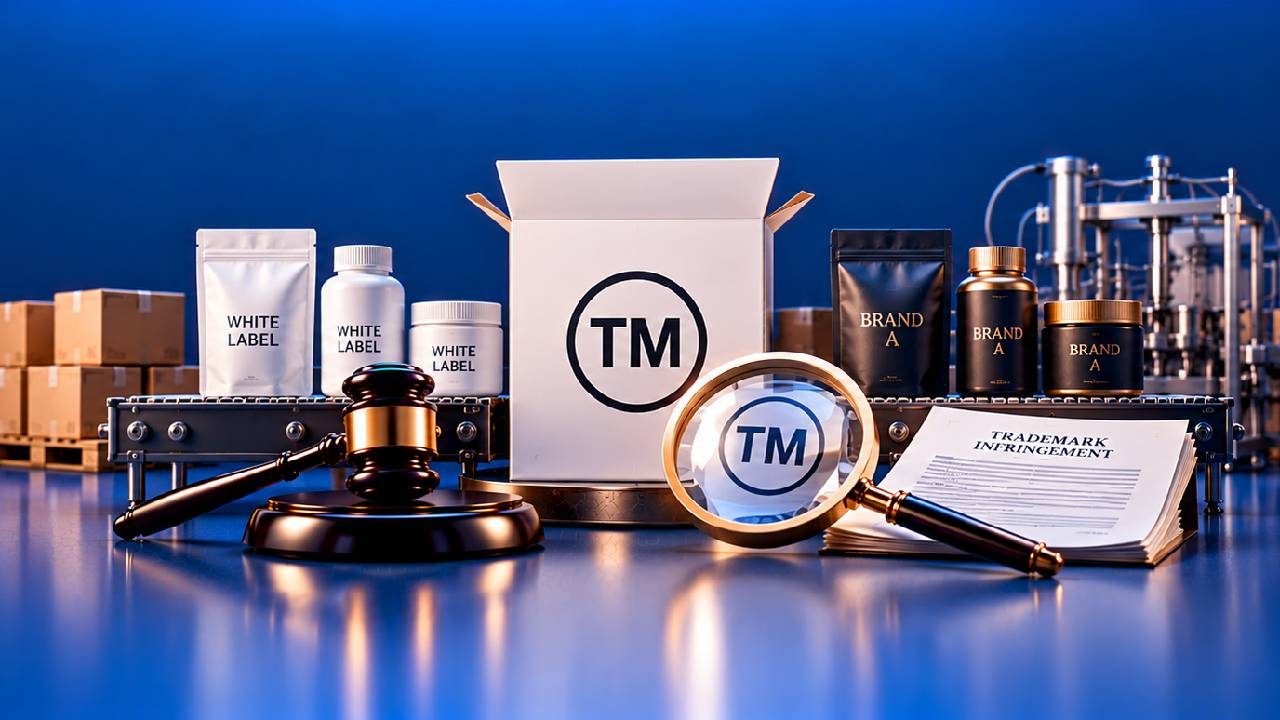
A white-label arrangement generally involves a manufacturer producing goods which another business markets under its own brand. The manufacturer may supply the same or a similar product to several businesses, each using different branding. Common examples include cosmetics, food products, supplements, clothing, electronics and pharmaceutical preparations.
White-label and private-label are often used interchangeably in commercial discussions, although businesses sometimes use private-label to describe products made to a retailer’s specific requirements or under an exclusive arrangement. Neither term creates a separate category of trademark ownership under Indian law.
The important distinction is between the business which manufactures the goods and the business whose brand identifies them in the market. These roles can belong to different entities. A manufacturer does not automatically own every trademark appearing on products it makes. Equally, a reseller does not automatically acquire rights in a manufacturer’s existing brand merely by marketing or distributing the goods.
Who owns the trademark in a white-label arrangement?
Trademark ownership depends on the facts, including who adopted the mark, who uses it as a source identifier, who controls the branded goods and whose goodwill consumers associate with it. Section 28 of the Trade Marks Act, 1999 gives a valid registered proprietor exclusive rights to use the mark for the registered goods or services, subject to the Act. Section 29 addresses infringement where an unauthorised party uses an identical or deceptively similar mark in the course of trade in circumstances covered by the provision.
A business which creates a brand and instructs a manufacturer to apply it to products may own the customer facing trademark, even though it does not physically manufacture the goods. The manufacturing agreement should support this arrangement by recording ownership and limiting the manufacturer’s permission to use the mark. However, ownership cannot be established merely by inserting a statement in a contract. The parties’ actual conduct, commercial records and use of the mark can also become relevant in a dispute.
How trademark infringement issues arise
a) Unauthorised use of a customer’s brand
A manufacturer may receive permission to apply a customer’s trademark to a specified product range. Problems arise when it continues using the mark beyond the agreed scope, produces additional branded stock without approval, or supplies branded goods to another buyer. Such conduct may amount to infringement under Section 29, depending on the registration, the nature of the use and the manufacturer’s authority. Section 29(6) specifically recognises activities such as applying a mark to goods or packaging, offering goods for sale and using the mark in advertising as forms of trademark use. The agreement should therefore specify the authorised products, quantities, territories, sales channels and duration of permitted use.
b) A manufacturer reuses branding for another customer
A manufacturer may develop packaging or product labels for one customer and later reproduce similar branding for another. This can create confusion if the second product uses an identical or deceptively similar name, logo or visual identity. The risk becomes more serious where the manufacturer has access to confidential brand plans, artwork or customer information. A contract should restrict unauthorised reproduction, disclosure and use of the customer’s intellectual property. A business should also conduct trademark searches before adopting a new brand. The official Indian Trade Marks Registry guidance explains the importance of registration, distinctiveness and selecting the appropriate goods and services classes.
c) Disputes over ownership after the relationship ends
A manufacturing or supply relationship may end because of quality concerns, payment disputes or a change in suppliers. If the agreement does not clearly establish ownership, either party may attempt to continue using the brand. A former manufacturer might retain labels, packaging or digital artwork. A brand owner might assume it can transfer production immediately, only to discover the manufacturer claims rights over the product name or design. The contract should address termination, disposal of unused packaging, existing inventory, return of artwork and cessation of trademark use. It should also clarify whether any limited sell off period is permitted.
d) A white-label manufacturer claims trademark rights through its corporate name
A manufacturer may argue it has acquired trademark rights because its company name appears on product packaging. However, a corporate name and a trademark are not necessarily the same thing. The relevant question is whether consumers perceive the name as identifying the commercial source of the goods. This issue was considered directly in Rexcin Pharmaceuticals Pvt. Ltd. v. Rekin Pharma Pvt. Ltd., decided by the Delhi High Court on 27 January 2026. Rexcin operated as a business to business white-label manufacturer. Its name appeared on pharmaceutical packaging in small, incidental references such as “manufactured for” or trademark usership, while the products were sold under separate brands.
The Court held, on the evidence before it, that this incidental appearance did not establish use of REXCIN as a trademark or source identifier for pharmaceutical products. It dismissed the rectification petition and refused interim injunctive relief. The underlying commercial suit was listed separately for directions. The decision does not mean a white-label manufacturer can never own a trademark. It shows why a business must establish genuine trademark use and consumer recognition rather than rely solely on its corporate name appearing on packaging.
e) A distributor or importer claims ownership of the manufacturer’s brand
A different dispute can arise when a manufacturer already owns a brand but an importer or distributor claims ownership after promoting and selling the products locally. In Parul Ruparelia v. Camme Wang, decided by the Calcutta High Court on 5 December 2025, the Court considered competing claims involving the PL SUPREME mark on torches and related products. It observed, at the interim stage, that ownership ordinarily vests in the person who puts the mark on the product. On the facts, the Chinese manufacturer had applied its brand to the goods, and the importers had not established an independent basis for claiming ownership. The judgment illustrates why distribution, promotion and trademark ownership must be treated as separate rights. A distributor should not assume it owns a brand merely because it has invested in marketing or developed a local sales network.
Legal provisions governing white-label trademark disputes
Sections 28 and 29 of the Trade Marks Act, 1999 form the starting point for registered trademark infringement claims. Section 27(2) also preserves the common law action for passing off, including where a claimant relies on an unregistered mark and can establish the necessary goodwill, misrepresentation and damage. Section 30 contains limitations on the effect of registered trademark rights. In particular, Section 30(1) may protect honest use to identify the proprietor’s goods or services, provided the use does not take unfair advantage of or harm the mark’s distinctive character or reputation. Section 30(3) addresses certain dealings in goods lawfully acquired and placed on the market by the proprietor or with its consent.
These provisions do not give a manufacturer or distributor unrestricted permission to use a brand. The scope of consent, the goods involved and the circumstances of subsequent use remain important. Where infringement or passing off is established, Section 135 allows courts to grant remedies including injunctions, damages or an account of profits, and delivery up of infringing labels and marks.
How businesses can reduce trademark risks
A well drafted white-label manufacturing agreement should identify the owner of each trademark, logo, product name and brand asset. It should grant the manufacturer a limited permission to use the customer’s mark only for authorised production and supply. The agreement should also set out quality standards, inspection rights, packaging approvals, restrictions on subcontracting, confidentiality obligations and responsibility for regulatory labelling. These provisions help protect the brand’s reputation while reducing uncertainty over the parties’ responsibilities.
Brand owners should conduct trademark searches before launching products and apply for registration in the relevant classes. They should retain evidence of adoption and use, including dated packaging, invoices, marketing material, sales records and manufacturing instructions. Manufacturers should also conduct checks before accepting branding instructions. They should confirm the customer’s authority to use the mark and avoid applying a third party’s trademark without appropriate permission. Businesses dealing with white label trademark infringement should preserve the relevant agreements, product samples, communications and invoices. These records can help establish the parties’ respective roles and the scope of authorised use.
Conclusion
White-label businesses depend on cooperation between manufacturers, brand owners and distributors. However, separating production from branding can create disputes over ownership, goodwill and authorised use. Indian trademark law protects genuine brand ownership while recognising the commercial roles of manufacturers and intermediaries. Clear contractual terms, appropriate trademark registration and consistent evidence of brand use can reduce these risks. Businesses should address intellectual property rights before production begins, rather than waiting until a dispute affects their supply chain or market reputation.
Frequently Asked Questions (FAQs)
Who owns the trademark in a white-label product business?
Ownership depends on who adopted and uses the mark as a source identifier, the commercial relationship and the goodwill associated with the brand. The manufacturer does not automatically own the customer’s trademark merely because it produces the goods.
Can a manufacturer sell the same product under different brands?
Generally, yes, if it has the necessary rights and the arrangement permits it. However, it must not misuse a customer’s trademark, confidential information or protected product assets. Exclusivity restrictions may also apply under the manufacturing agreement.
Can a white-label manufacturer register its own trademark?
Yes. A manufacturer may register a mark for its own goods or services if it satisfies the requirements of the Trade Marks Act, 1999. It should not claim ownership of a customer’s brand without a lawful basis.
What happens if a manufacturer continues using a brand after termination?
Continued use beyond the permission granted may lead to trademark infringement or contractual claims. The outcome depends on the agreement, the nature of the use and the proprietor’s rights.
Is a written agreement necessary for white-label manufacturing?
A written agreement is strongly advisable. It should define trademark ownership, permitted use, quality control, confidentiality, product specifications, packaging rights and what happens to branded stock when the relationship ends.
Can a distributor claim ownership of a manufacturer’s trademark?
Not merely because it imports, promotes or sells the products. Ownership depends on the evidence of adoption, use, goodwill and the parties’ legal relationship. A distributor should obtain an express assignment if ownership is intended to transfer.
What remedies are available for white-label trademark infringement in India?
Depending on the facts, a claimant may seek an injunction, damages, an account of profits or delivery up of infringing labels and marks under Section 135 of the Trade Marks Act, 1999.