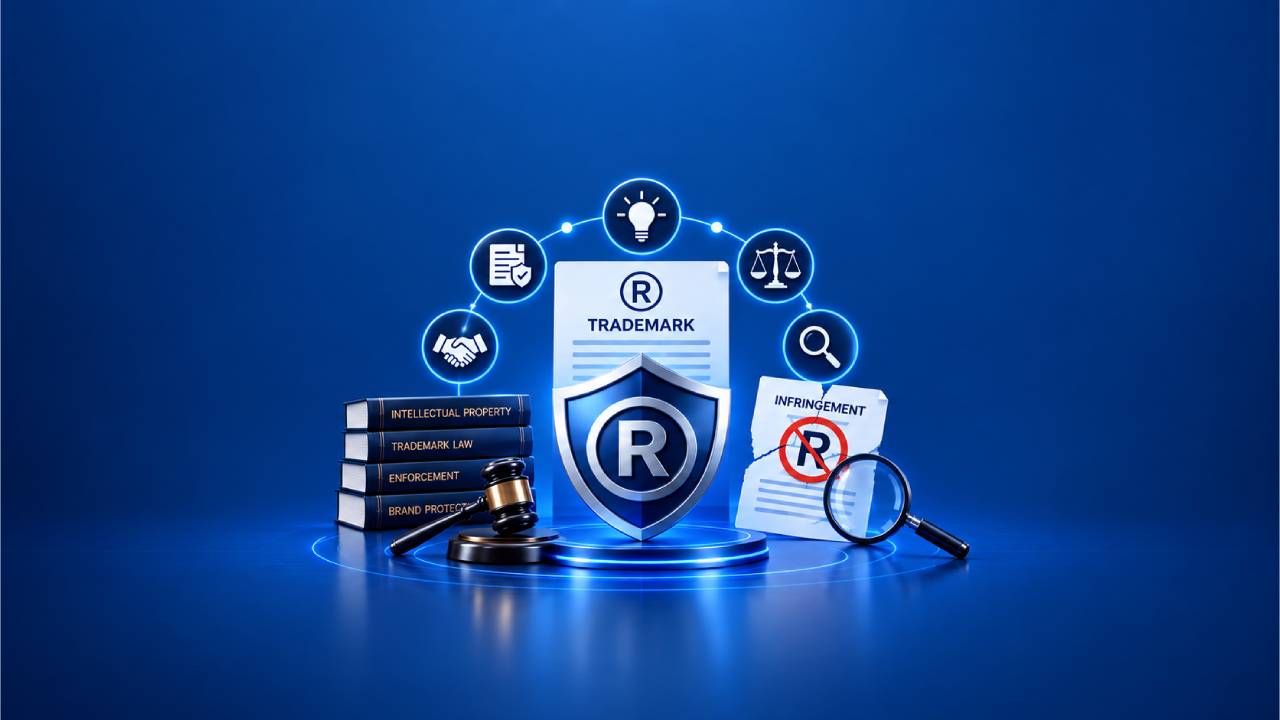

Global trade has created significant opportunities for businesses to expand into new markets. At the same time, it has increased the risk of Cross Border Counterfeiting, allowing counterfeit goods to move rapidly across jurisdictions through international supply chains, ecommerce platforms, and unauthorised distributors. Modern counterfeit networks operate across multiple countries, making enforcement more complex than ever before. Businesses must adopt a comprehensive international brand protection strategy to reduce commercial risks, safeguard intellectual property, and maintain consumer confidence.
An effective approach to Cross Border Counterfeiting combines intellectual property protection, customs enforcement, supply chain monitoring, digital surveillance, legal action, and international cooperation. Businesses investing in proactive brand protection are better prepared to prevent counterfeit products from entering legitimate markets and minimise financial losses.
Understanding Cross Border Counterfeiting
Cross Border Counterfeiting refers to the manufacture, distribution, import, export, or sale of counterfeit goods across national borders. Counterfeit products may be produced in one country, transported through several jurisdictions, and sold in completely different markets using physical retail channels or online platforms. The growth of international ecommerce, global logistics, and digital marketplaces has enabled counterfeiters to reach customers worldwide with greater speed and lower operational costs. This creates significant challenges for businesses attempting to enforce intellectual property rights across multiple legal systems. Counterfeit goods affect almost every industry, including pharmaceuticals, fashion, cosmetics, electronics, automotive components, luxury goods, food products, consumer goods, and industrial equipment.
Why International Brand Protection Matters
Counterfeit products create financial, legal, and reputational risks for businesses operating internationally. Revenue losses remain one of the most visible consequences. However, the wider impact often extends beyond direct sales. Counterfeit goods may reduce customer confidence, increase warranty claims, damage long term brand value, and expose consumers to unsafe products.International enforcement also becomes more expensive when businesses respond only after counterfeit goods have entered multiple markets. A proactive brand protection strategy reduces enforcement costs while improving the ability to detect and prevent infringement at an early stage.
Register Intellectual Property in Key Markets
Brand protection begins with strong intellectual property rights. Businesses should register trademarks, patents, industrial designs, and copyrights in every jurisdiction where products are manufactured, distributed, marketed, or sold. Many organisations mistakenly believe domestic registration provides global protection. Intellectual property rights are territorial. Registration in one country generally does not provide automatic protection elsewhere. Businesses expanding internationally should identify priority markets based on manufacturing activity, consumer demand, and counterfeiting risk. Guidance published by the Office of the Controller General of Patents, Designs and Trade Marks provides valuable information on intellectual property registration procedures for rights holders operating in India.
Strengthen Customs Protection
Customs authorities play an important role in preventing counterfeit goods from crossing international borders. Businesses should record registered intellectual property rights with customs authorities wherever recordation systems are available. Customs officials may detain suspicious shipments, inspect imported goods, and cooperate with rights holders during investigations. Maintaining updated product information, authentication guides, and contact details enables customs officers to identify counterfeit products more effectively. Businesses importing goods into India should also understand border protection measures administered by the Central Board of Indirect Taxes and Customs.
Build a Secure Global Supply Chain
Counterfeit products frequently enter legitimate distribution networks through weak supply chain controls. Businesses should evaluate every supplier, manufacturer, logistics provider, distributor, and warehouse involved in international operations.
Supply chain protection should include:
- Supplier due diligence
- Contractual compliance requirements
- Product traceability
- Regular supplier audits
- Inventory verification
- Shipment monitoring
- Documentation reviews
Supply chain visibility reduces opportunities for counterfeit goods to enter authorised distribution channels.
Use Advanced Product Authentication
Modern authentication technologies help businesses distinguish genuine products from counterfeit goods. Depending on industry requirements, organisations may introduce QR codes, unique serial numbers, holograms, tamper evident packaging, digital verification systems, blockchain solutions, or radio frequency identification technologies. Authentication measures should be difficult to duplicate while remaining simple for customs officials, distributors, retailers, and consumers to verify. Regular updates strengthen product security as counterfeit methods continue to evolve.
Monitor Online Marketplaces Globally
Online platforms have become major distribution channels for counterfeit goods. Businesses should establish continuous monitoring programmes covering ecommerce marketplaces, social media platforms, online advertisements, domain registrations, mobile applications, and independent websites. Monitoring should identify unauthorised sellers, suspicious pricing, misleading advertisements, and fraudulent product listings. Prompt reporting allows businesses to request removal of infringing listings before counterfeit products reach larger audiences. Technology supported monitoring significantly improves detection efficiency across international markets.
Conduct International Market Investigations
Professional investigations provide valuable intelligence regarding counterfeit manufacturing and distribution networks. Investigations may identify manufacturing facilities, storage warehouses, shipping routes, import channels, retail outlets, online sellers, and financial transactions connected with counterfeit activities. Businesses should maintain detailed investigation reports supported by photographs, purchase records, invoices, digital evidence, and witness statements where appropriate. Accurate documentation strengthens subsequent enforcement actions.
Preserve Evidence Across Jurisdictions
International litigation requires reliable evidence collected according to applicable legal standards. Businesses should preserve counterfeit product samples, original products, invoices, shipping documents, customs records, website screenshots, investigation reports, purchase confirmations, payment records, and digital communications. Maintaining proper chain of custody improves evidentiary reliability during legal proceedings. Businesses operating internationally should establish standard evidence preservation procedures across all regions.
Develop a Global Enforcement Strategy
Brand protection requires coordinated enforcement rather than isolated legal actions. Businesses should establish clear procedures covering civil litigation, criminal complaints, customs enforcement, administrative actions, online platform complaints, and alternative dispute resolution where appropriate. International coordination between local legal teams improves efficiency and prevents duplication of effort. Many multinational organisations work with experienced anti counterfeiting law firms in India when counterfeit networks affect Indian manufacturing, imports, exports, or domestic distribution channels. Early legal planning supports faster enforcement outcomes.
Collaborate with International Authorities
Counterfeit networks frequently operate across multiple countries. Businesses should cooperate with customs authorities, police agencies, consumer protection regulators, intellectual property offices, and international enforcement organisations wherever investigations extend beyond one jurisdiction. Sharing product authentication guides, technical specifications, and investigation findings often improves enforcement efficiency. Public and private sector cooperation remains one of the strongest tools against organised counterfeit operations.
Train Employees and Distribution Partners
Employee awareness strengthens every aspect of international brand protection. Training programmes should cover counterfeit identification, reporting procedures, evidence preservation, supplier verification, online monitoring, customer complaints, and regulatory obligations. Distributors and authorised retailers should also understand product authentication procedures and reporting responsibilities. Consistent education improves early detection across international operations.
Educate Consumers
Consumers play an important role in reducing counterfeit demand. Businesses should provide clear guidance on purchasing genuine products, recognising authentication features, identifying authorised retailers, and reporting suspicious products. Educational campaigns improve public awareness while strengthening consumer trust in legitimate brands. Customer engagement also supports wider compliance efforts.
Review Brand Protection Measures Regularly
Counterfeit methods continue to evolve as technology advances. Businesses should review brand protection strategies regularly to assess legal developments, supply chain risks, digital threats, authentication technologies, and enforcement outcomes. Regular reviews ensure protection measures remain effective across changing international markets. As international operations expand, many organisations seek advice from the best intellectual property law firm in India to strengthen intellectual property portfolios, review cross jurisdiction enforcement strategies, and improve long term brand protection planning.
Common Challenges in Cross Border Counterfeiting
Businesses frequently encounter several challenges while combating international counterfeiting. Different legal systems, inconsistent enforcement procedures, complex supply chains, anonymous online sellers, language barriers, jurisdictional issues, and rapidly changing counterfeit techniques often complicate investigations. Successful organisations address these challenges through preparation, continuous monitoring, strong documentation, and coordinated international enforcement. A structured strategy provides greater resilience against organised counterfeit networks.
Conclusion
Cross Border Counterfeiting continues to present one of the greatest threats to global brands. International businesses must adopt proactive protection strategies rather than relying solely on reactive legal action after counterfeit products enter the market. Strong intellectual property protection, customs cooperation, secure supply chains, digital monitoring, product authentication, evidence preservation, employee training, and coordinated international enforcement together create an effective defence against counterfeit activity. Businesses investing in comprehensive brand protection not only reduce commercial losses but also strengthen consumer confidence, improve regulatory compliance, and protect valuable intellectual property across international markets. In an increasingly connected global economy, proactive planning remains the most effective strategy for combating cross border counterfeiting.
Frequently Asked Questions (FAQs)
What is Cross Border Counterfeiting?
Cross Border Counterfeiting refers to the manufacture, transport, import, export, distribution, or sale of counterfeit goods across international borders through physical or digital markets.
Why is cross border counterfeiting increasing?
Global ecommerce, international logistics, online marketplaces, and complex supply chains have made it easier for counterfeiters to distribute fake products across multiple countries.
Which industries are most affected by cross border counterfeiting?
Industries including pharmaceuticals, electronics, luxury goods, automotive parts, cosmetics, fashion, food products, consumer goods, and industrial equipment face significant counterfeit risks.
How can businesses prevent cross border counterfeiting?
Businesses should register intellectual property rights internationally, strengthen supply chains, monitor online marketplaces, cooperate with customs authorities, preserve evidence, and implement product authentication technologies.
Why is customs recordation important?
Customs recordation enables border authorities to identify, inspect, detain, and prevent counterfeit goods from entering legitimate markets more effectively.