Counterfeiting has emerged as one of the most significant challenges facing businesses across multiple sectors. The growth of digital commerce, global supply chains, and sophisticated manufacturing techniques has enabled counterfeit products to infiltrate markets more easily than ever before. Today, **counterfeiting in India** affects a wide range of industries, causing financial losses, damaging brand reputation, and creating serious risks for consumers. From pharmaceuticals and automotive parts to luxury goods and consumer electronics, counterfeit products continue to undermine legitimate businesses and disrupt market integrity.
Understanding which industries face the greatest exposure to counterfeit activities can help businesses implement stronger intellectual property protection measures and reduce commercial risks.
Counterfeiting in India
The problem of counterfeiting in India extends far beyond the sale of imitation luxury products. Counterfeit goods now impact critical sectors that directly affect public health, consumer safety, and economic growth. As consumer demand increases and online marketplaces expand, counterfeiters continue to exploit opportunities to distribute fake products through both traditional and digital channels. The consequences include reduced revenues for legitimate businesses, loss of government tax income, erosion of consumer confidence, and threats to public safety. Government agencies, law enforcement authorities, customs officials, and intellectual property owners continue to strengthen enforcement efforts. However, the scale and complexity of counterfeiting operations make it an ongoing challenge.
Why Counterfeiting Remains a Serious Concern
Counterfeit products are designed to imitate genuine goods while avoiding the costs associated with research, development, quality control, and regulatory compliance. This enables counterfeiters to offer products at significantly lower prices. Consumers are often attracted by apparent bargains without realising the products are fake. In many cases, counterfeit goods fail to meet basic safety standards and may cause harm to users. Businesses affected by counterfeiting must invest substantial resources in enforcement, investigations, monitoring, and legal proceedings. The impact can be particularly severe for industries where product quality and consumer trust are critical.
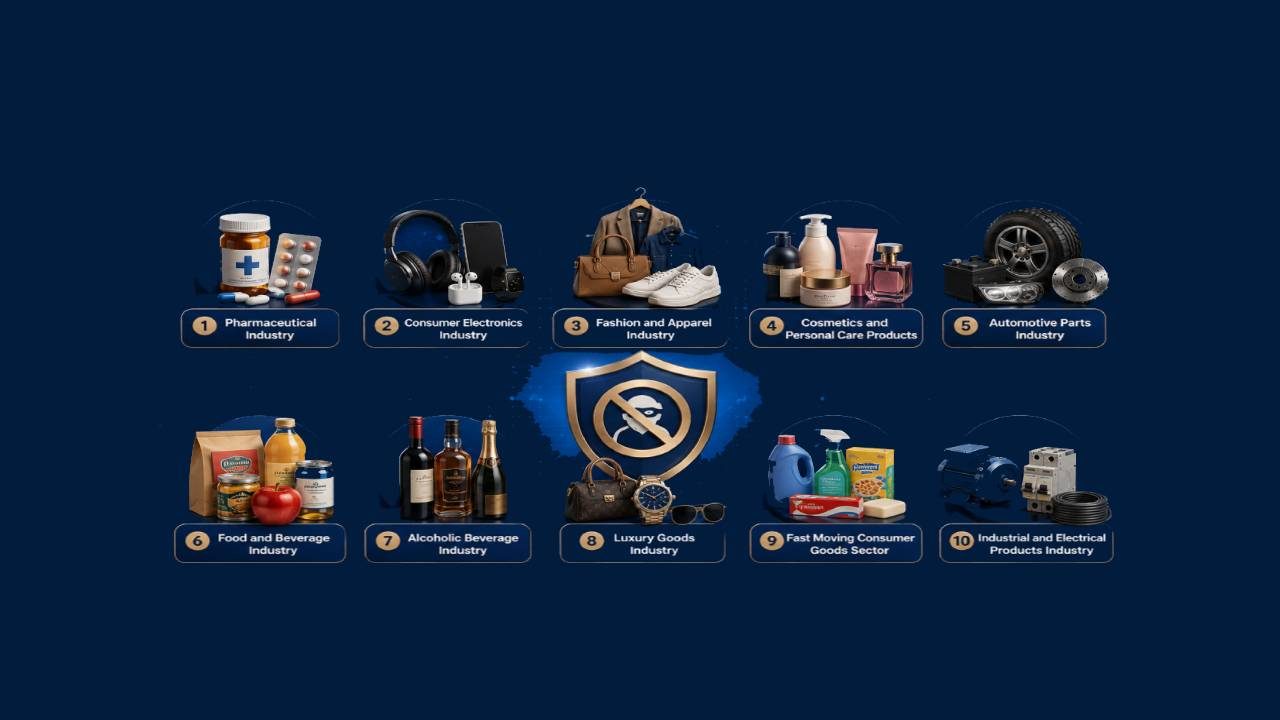
1. Pharmaceutical Industry
The pharmaceutical sector remains one of the most heavily affected industries. Counterfeit medicines present a direct threat to public health. Fake pharmaceutical products may contain incorrect ingredients, improper dosages, or harmful substances. These products can lead to treatment failure, adverse health consequences, and even loss of life. India is one of the world’s largest pharmaceutical manufacturing hubs, making protection of genuine medicines a priority for regulators and industry participants. The Ministry of Health and Family Welfare and the Central Drugs Standard Control Organisation continue to strengthen regulatory oversight and enforcement measures against counterfeit medicines.
2. Consumer Electronics Industry
Consumer electronics have become a prime target for counterfeiters due to strong demand and high profit margins. Counterfeit mobile phones, chargers, batteries, headphones, and accessories frequently enter the market through unauthorised distribution channels. These products often fail to meet safety standards and may pose risks such as overheating, electrical faults, and device damage. Consumers purchasing counterfeit electronics may unknowingly compromise both safety and performance.
3. Fashion and Apparel Industry
The fashion industry has long been associated with counterfeiting. Counterfeit clothing, footwear, handbags, watches, and accessories imitate popular brands and are sold through physical markets, online platforms, and social media channels. Brand owners face significant reputational damage when consumers associate poor quality counterfeit products with genuine brands. The fashion sector continues to invest heavily in intellectual property protection and brand enforcement initiatives.
4. Cosmetics and Personal Care Products
The cosmetics industry has experienced substantial growth in recent years, making it an attractive target for counterfeit operations. Counterfeit beauty products often mimic popular brands while using inferior or unsafe ingredients. Consumers may suffer allergic reactions, skin damage, or other health complications. The increasing influence of social media marketing has further expanded the reach of counterfeit cosmetics, creating additional enforcement challenges for brand owners.
5. Automotive Parts Industry
Counterfeit automotive components present serious safety concerns. Fake brake pads, filters, spark plugs, bearings, tyres, and engine components can compromise vehicle performance and increase accident risks. Consumers may struggle to distinguish genuine parts from counterfeit alternatives due to sophisticated packaging and branding. Manufacturers invest considerable resources in monitoring supply chains and identifying unauthorised products entering the market. Businesses operating in this sector often consult an anti counterfeiting protection lawyer to strengthen enforcement strategies and address recurring infringement concerns.
6. Food and Beverage Industry
Counterfeiting within the food and beverage sector creates risks extending beyond intellectual property violations. Counterfeit packaged foods, beverages, edible oils, and nutritional products may contain substandard or unsafe ingredients. Such products can harm consumer health and undermine confidence in established brands. Food safety regulators continue to enhance inspection and enforcement measures to combat these risks. Consumer awareness also plays a critical role in identifying and reporting suspicious products.
7. Alcoholic Beverage Industry
The alcoholic beverage sector experiences widespread counterfeiting due to strong consumer demand and premium pricing. Counterfeit alcohol products may contain dangerous substances and are often distributed through unauthorised channels. In extreme cases, consumption of counterfeit alcohol has resulted in serious health consequences. Brand owners, regulators, and law enforcement agencies regularly conduct enforcement operations targeting counterfeit manufacturing and distribution networks.
8. Luxury Goods Industry
Luxury brands remain among the most visible victims of counterfeiting. High end fashion products, jewellery, watches, accessories, and designer goods are frequently copied due to their strong market appeal. Counterfeiters exploit the prestige associated with established brands to generate substantial profits. Luxury brands typically maintain extensive anti counterfeiting programmes involving investigations, customs enforcement, and litigation to protect their intellectual property rights.
9. Fast Moving Consumer Goods Sector
Fast Moving Consumer Goods represent another industry heavily affected by counterfeit activity. Products such as detergents, household cleaners, packaged foods, personal hygiene items, and consumer essentials are often copied and sold through informal retail networks. Because these products are purchased frequently and in large volumes, counterfeiters can generate significant revenues while remaining difficult to detect. The widespread distribution of counterfeit FMCG products poses both economic and consumer protection concerns.
10. Industrial and Electrical Products Industry
Industrial equipment and electrical products face increasing counterfeiting risks. Counterfeit cables, switches, circuit breakers, industrial tools, and electrical components may not comply with required safety standards. Defective products can result in equipment failure, property damage, and workplace hazards. Manufacturers operating in this sector continue to enhance product authentication measures and supply chain monitoring systems.
The Economic Impact of Counterfeiting
The effects of counterfeiting extend beyond individual businesses. Lost sales reduce revenues for legitimate manufacturers and distributors. Governments experience reduced tax collections due to unlawful trade activities. Employment opportunities may also be affected as businesses face increased competitive pressure from counterfeit products. Counterfeiting discourages innovation by reducing the return on investments in research, product development, and brand building. The broader economic impact highlights the importance of effective intellectual property enforcement and regulatory oversight.
The Role of Intellectual Property Protection
Strong intellectual property protection remains one of the most effective tools for combating counterfeiting. Trademark registration allows businesses to establish legal ownership of their brands and pursue enforcement actions against infringers. Copyright, design, and patent protections may also support broader anti counterfeiting efforts depending on the nature of the product. Information regarding intellectual property registration and enforcement can be accessed through the Office of the Controller General of Patents, Designs and Trade Marks. Businesses can also utilise customs recordation mechanisms through Indian Customs to prevent counterfeit imports from entering the domestic market. These legal frameworks provide important safeguards for rights holders seeking to protect their brands.
Strategies for Businesses to Combat Counterfeiting
Businesses should adopt a comprehensive approach to intellectual property protection. Early trademark registration, continuous market monitoring, consumer education initiatives, supply chain controls, and customs enforcement can significantly reduce exposure to counterfeit risks. Digital monitoring has become increasingly important due to the growth of online marketplaces and social commerce platforms. Many organisations work closely with premier intellectual property attorneys to develop tailored enforcement strategies addressing industry specific challenges and emerging threats. A proactive approach enables businesses to identify risks early and respond effectively.
Conclusion
The growing problem of counterfeiting in India affects a diverse range of industries, from pharmaceuticals and automotive components to luxury goods and consumer products. While financial losses remain a significant concern, the broader consequences often include safety risks, reputational damage, and reduced consumer trust. The ten industries discussed in this article represent some of the sectors most vulnerable to counterfeit activity. However, the threat continues to evolve as counterfeiters adopt increasingly sophisticated methods and expand their use of digital platforms. Businesses must remain vigilant and invest in strong intellectual property protection measures. Through trademark registration, enforcement programmes, customs recordation, market monitoring, and consumer awareness initiatives, organisations can better protect their brands and contribute to a safer marketplace for consumers.
Frequently Asked Questions (FAQs)
What is counterfeiting in India?
Counterfeiting in India refers to the unauthorised manufacture, distribution, or sale of products designed to imitate genuine branded goods.
Which industry is most affected by counterfeiting in India?
The pharmaceutical industry is widely regarded as one of the most affected sectors due to the serious health risks associated with counterfeit medicines.
Why is counterfeiting a major concern for businesses?
Counterfeiting causes financial losses, damages brand reputation, reduces consumer trust, and creates unfair competition.
How do counterfeit products affect consumers?
Consumers may experience poor product performance, financial losses, safety risks, and health hazards depending on the type of counterfeit product involved.
Are counterfeit goods illegal in India?
Yes. Counterfeit goods violate intellectual property laws and may result in civil and criminal penalties.