
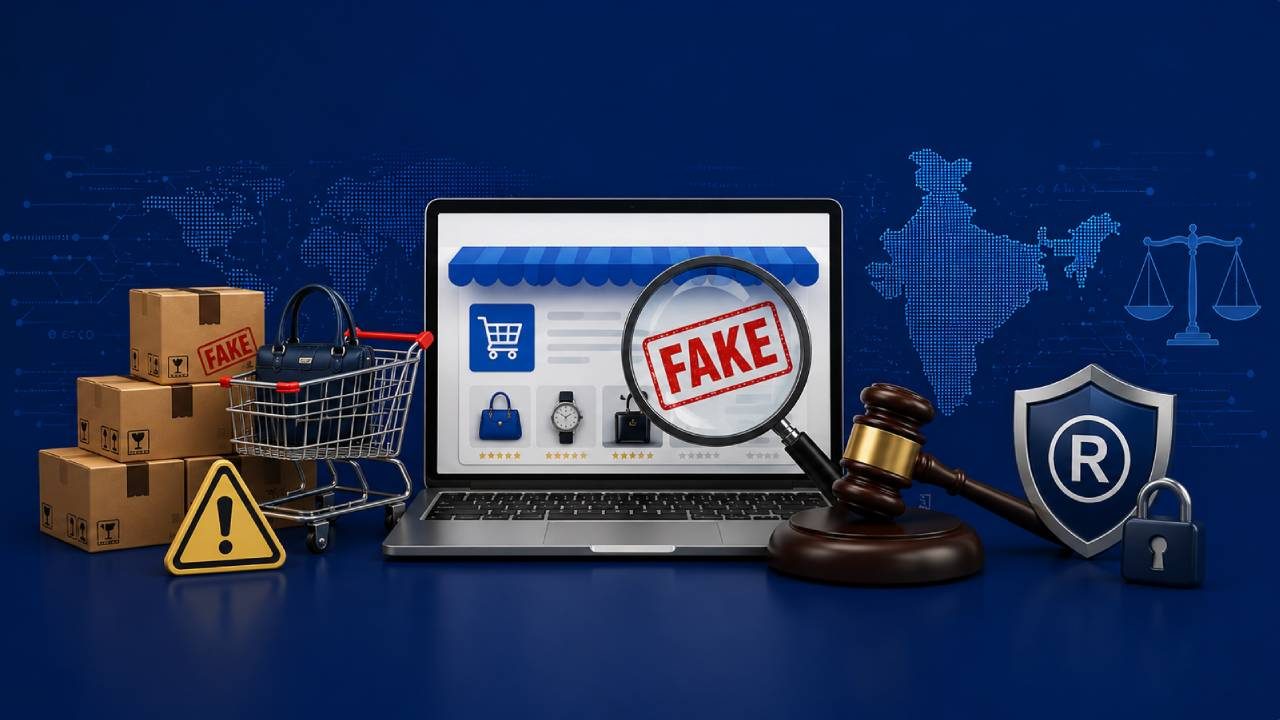
The rapid growth of online shopping has transformed the retail landscape in India. Consumers now have access to thousands of products through digital marketplaces, social commerce platforms, and independent online stores. While this expansion has created significant opportunities for businesses, it has also intensified the problem of E-Commerce Counterfeiting. Counterfeit goods are increasingly finding their way onto online platforms, creating serious legal, commercial, and reputational challenges for brand owners. As India’s digital economy continues to expand, businesses must understand the risks associated with online counterfeiting and the legal mechanisms available to protect their intellectual property rights. Effective enforcement strategies are essential for safeguarding brands, maintaining consumer trust, and ensuring fair competition in the marketplace.
E-Commerce Counterfeiting and Its Growing Impact on Indian Brands
E-Commerce Counterfeiting refers to the sale, distribution, promotion, or advertisement of counterfeit products through online channels. These products often imitate genuine branded goods by copying trademarks, packaging, logos, product descriptions, and images. The growth of online marketplaces has made it easier for counterfeit sellers to reach consumers across geographical boundaries. Unlike traditional markets, digital platforms allow sellers to operate with limited physical presence, making detection and enforcement more complex. Counterfeit products are commonly found in sectors such as fashion, cosmetics, electronics, pharmaceuticals, luxury goods, consumer products, and automobile components. The increasing popularity of online shopping has created new opportunities for infringers to exploit brand reputation and consumer confidence.
Why Counterfeiting Thrives in Online Marketplaces
The online environment presents several factors that contribute to the rise of counterfeit goods. Large volumes of product listings make monitoring difficult for both platform operators and brand owners. Sellers can quickly create new accounts after previous listings have been removed. Anonymous transactions and complex supply chains often conceal the identity of counterfeit traders. Many consumers are attracted by heavily discounted prices and may unknowingly purchase fake products. In some instances, counterfeit listings closely resemble genuine products, making it challenging to distinguish authentic goods from infringing products. The increasing use of social media commerce has further expanded opportunities for counterfeiters. Products can now be marketed through advertisements, influencer promotions, messaging applications, and direct consumer engagement.
The Economic Impact of Online Counterfeiting
Counterfeit goods sold through e commerce platforms can cause substantial financial losses for businesses. When consumers purchase counterfeit products instead of genuine goods, legitimate businesses lose revenue and market share. Brand owners invest heavily in product development, quality assurance, marketing, and customer support. Counterfeit sellers benefit from these investments without incurring comparable costs. Beyond direct financial losses, businesses often face increased expenses related to investigations, enforcement actions, consumer complaints, and reputation management. Small and medium enterprises are particularly vulnerable because limited resources may restrict their ability to monitor online marketplaces and pursue legal action against infringers.
Damage to Brand Reputation and Consumer Trust
Brand reputation is one of the most valuable assets a business possesses. Counterfeit products can undermine years of effort invested in building consumer confidence. When consumers unknowingly purchase counterfeit goods, they may associate poor quality or product failures with the legitimate brand. Negative experiences often result in customer dissatisfaction, adverse reviews, and reduced trust. Online reviews and social media discussions can amplify reputational harm. A single counterfeit product reaching consumers can generate widespread criticism and damage public perception of a brand. As digital commerce continues to evolve, maintaining consumer trust has become increasingly important for long term business success.
Legal Framework Governing Counterfeit Goods in India
India has established a robust legal framework to address trademark infringement and counterfeit products. The Trade Marks Act, 1999 serves as the primary legislation protecting registered trademarks against unauthorised use. Brand owners can initiate civil proceedings seeking injunctions, damages, and delivery of infringing goods. Criminal remedies are also available in cases involving deliberate trademark infringement and counterfeiting. Authorities may seize counterfeit products and prosecute offenders under applicable provisions of law. Additional protection may arise under the Copyright Act, 1957, the Information Technology Act, 2000, and consumer protection laws depending on the nature of the infringement. Businesses can access information regarding trademark registration and protection through the official website of the Controller General of Patents, Designs and Trade Marks. Government resources provide valuable guidance on intellectual property rights and enforcement procedures.
Liability of E Commerce Platforms
One of the most debated legal issues involves the responsibility of online marketplaces for counterfeit products sold through their platforms. Indian courts have increasingly examined the role of intermediaries in preventing intellectual property infringement. While online platforms generally enjoy certain protections as intermediaries, these protections are not absolute. Platforms are expected to exercise due diligence, respond to legitimate complaints, and remove infringing content when notified. Failure to take reasonable action may expose platforms to legal scrutiny. Several judicial decisions have emphasised the importance of balancing intermediary protection with the rights of trademark owners. Courts have recognised the need for platforms to cooperate with brand owners in combating counterfeit trade.
Challenges Faced by Brand Owners
Despite the availability of legal remedies, enforcement remains challenging. Identifying counterfeit sellers can be difficult when false identities or incomplete information are used during account registration. Sellers frequently shift between platforms and create new accounts following enforcement actions. Cross border transactions add another layer of complexity. Counterfeit goods may be manufactured in one jurisdiction, sold through another platform, and delivered to consumers in India. The speed at which online listings appear and disappear often makes traditional enforcement methods less effective. Brand owners must continuously monitor digital channels to identify potential infringements. Many businesses engage an experienced anti counterfeit attorney in India to develop enforcement strategies, coordinate investigations, and pursue legal action against counterfeit operators.
Importance of Trademark Registration in Online Enforcement
Trademark registration forms the foundation of effective brand protection. Registered trademarks provide businesses with stronger legal rights and facilitate enforcement against counterfeit sellers. Online platforms often require proof of intellectual property ownership before acting on infringement complaints. A registered trademark also strengthens a brand owner’s position when seeking injunctions, damages, or criminal remedies. Businesses entering the Indian market should prioritise trademark registration at an early stage to minimise future enforcement challenges.
Emerging Technologies in Anti Counterfeiting Efforts
Technology is becoming an important tool in the fight against online counterfeiting. Artificial intelligence systems are increasingly used to monitor marketplaces and identify suspicious listings. Machine learning tools can analyse product descriptions, images, pricing patterns, and seller behaviour to detect potential infringements. Many businesses now incorporate authentication features such as QR codes, serial numbers, blockchain verification, and digital product passports. These technologies not only assist enforcement efforts but also help consumers verify product authenticity before making purchases.
The Role of Government Authorities
Government agencies play a critical role in combating counterfeit trade. Indian Customs authorities can prevent the importation of counterfeit goods through border enforcement mechanisms. Businesses may record their intellectual property rights with customs authorities to facilitate detection and seizure of infringing products. Law enforcement agencies also conduct investigations and raids against counterfeit networks operating within India. Information regarding customs enforcement and intellectual property protection can be obtained through official government resources, including the Department for Promotion of Industry and Internal Trade and Indian Customs authorities.
Best Practices for Businesses to Combat Online Counterfeiting
Businesses must adopt a proactive approach to brand protection in the digital environment. Regular marketplace monitoring, prompt enforcement action, consumer education, and strong intellectual property portfolios remain essential. Establishing relationships with online platforms can also improve response times when infringement occurs. Collaboration between legal teams, investigators, technology providers, and enforcement authorities often produces the most effective results. Many companies work with one of the top IP law firms in India to implement comprehensive brand protection programmes designed to address evolving counterfeiting risks.
Future Outlook for E Commerce and Brand Protection
The challenge of online counterfeiting is expected to remain significant as digital commerce continues to expand. However, increasing awareness, stronger regulatory frameworks, advanced monitoring technologies, and greater cooperation between stakeholders are improving enforcement capabilities. Businesses that invest in proactive protection measures are better positioned to safeguard their brands, maintain consumer trust, and reduce the commercial impact of counterfeit activity. As India strengthens its intellectual property ecosystem, effective enforcement against counterfeit goods will remain an important component of sustainable economic growth and digital commerce development.
Conclusion
E commerce has transformed the way businesses engage with consumers, but it has also created new opportunities for counterfeiters. The rise of E-Commerce Counterfeiting presents complex legal and commercial challenges for brands operating in India. Counterfeit goods affect revenue, damage brand reputation, undermine consumer trust, and create significant enforcement costs. While India offers a strong legal framework for intellectual property protection, businesses must remain vigilant and adopt proactive strategies to combat online infringement. By combining trademark protection, technology driven monitoring, legal enforcement, and consumer awareness initiatives, businesses can strengthen their defences against counterfeit products and preserve the integrity of their brands in an increasingly digital marketplace.
Frequently Asked Questions (FAQs)
What is E-Commerce Counterfeiting?
E Commerce Counterfeiting refers to the sale or promotion of counterfeit products through online marketplaces, websites, social media platforms, and other digital channels.
Why is online counterfeiting increasing in India?
The growth of online shopping, ease of seller registration, anonymous transactions, and expanding digital marketplaces have contributed to the rise of counterfeit products online.
Is selling counterfeit products online illegal in India?
Yes. Selling counterfeit goods may constitute trademark infringement and can result in civil and criminal liability under Indian law.
Can online marketplaces be held liable for counterfeit products?
Online platforms may face legal scrutiny if they fail to exercise due diligence or do not respond appropriately to legitimate infringement complaints.
How can businesses protect their brands from counterfeit sellers?
Businesses should register trademarks, monitor online platforms, use authentication technologies, educate consumers, and pursue legal enforcement against infringers.