
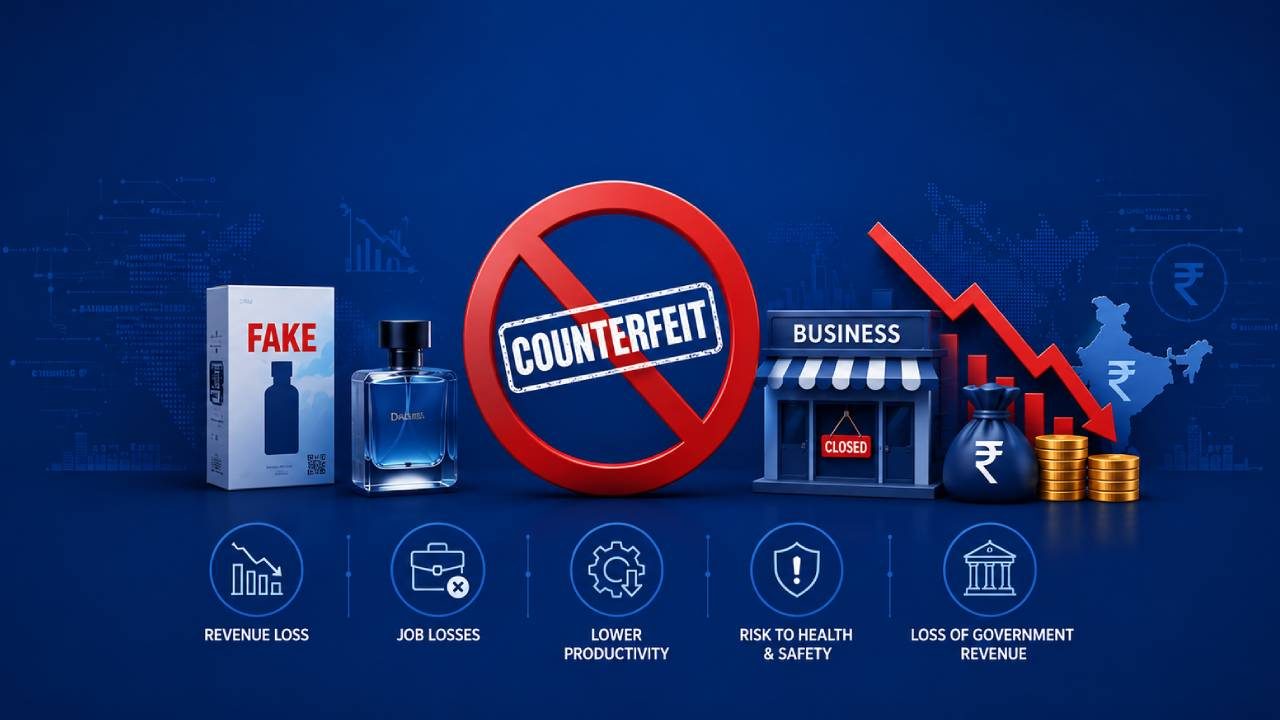
Counterfeit goods have become one of the most significant challenges facing businesses across India. From luxury products and consumer electronics to pharmaceuticals and automotive parts, counterfeit products have infiltrated almost every industry. The Impact of Counterfeit Goods extends far beyond financial losses suffered by brand owners. It affects consumer trust, public safety, employment, government revenue, and overall economic growth.
As India continues to emerge as a global manufacturing and consumption hub, tackling counterfeiting has become increasingly important. Businesses, policymakers, law enforcement agencies, and consumers all have a role to play in reducing the circulation of fake products and protecting intellectual property rights.
Understanding Counterfeit Goods
Counterfeit goods are products deliberately manufactured, distributed, or sold by unauthorised parties while imitating genuine branded products. These goods often carry identical or confusingly similar trademarks, packaging, labels, and designs intended to deceive consumers.
Counterfeit products are commonly found in sectors such as fashion, cosmetics, pharmaceuticals, electronics, automobile spare parts, fast moving consumer goods, and industrial equipment. The rise of digital marketplaces and social media commerce has further increased opportunities for counterfeiters to reach consumers across India.
Impact of Counterfeit Goods on Indian Businesses and the Economy
The Impact of Counterfeit Goods on businesses and the wider economy is extensive. While many consumers may view counterfeit products as cheaper alternatives, their long term consequences create significant damage across multiple sectors.
Loss of Revenue for Legitimate Businesses
One of the most immediate effects of counterfeiting is the diversion of sales away from genuine businesses. When consumers unknowingly purchase counterfeit products, legitimate manufacturers lose revenue and market share. Businesses invest substantial resources in research, product development, branding, quality control, marketing, and customer service. Counterfeiters exploit these investments without incurring similar costs. As a result, genuine businesses struggle to compete against illegally produced alternatives sold at lower prices. For many small and medium enterprises, prolonged losses caused by counterfeiting can hinder expansion plans and reduce profitability.
Damage to Brand Reputation
A strong brand represents years of investment and customer trust. Counterfeit goods can severely damage this reputation. Consumers who unknowingly purchase counterfeit products often associate poor quality, defects, or safety issues with the original brand. Negative experiences may result in customer dissatisfaction, online complaints, and loss of confidence. In competitive markets, even a small decline in consumer trust can significantly affect long term business performance. Brand owners frequently spend additional resources on reputation management and consumer awareness campaigns to restore confidence.
Reduced Investment in Innovation
Innovation is a key driver of economic growth. Businesses invest heavily in developing new products, technologies, and services to remain competitive. When counterfeiters replicate successful products and enter the market quickly, genuine businesses may struggle to recover their investments. This discourages future innovation and limits incentives for research and development. Over time, industries affected by widespread counterfeiting may experience slower technological advancement and reduced competitiveness in international markets.
Impact on Employment Opportunities
Counterfeiting does not only affect businesses. It also impacts employment across supply chains. When legitimate companies lose sales and profitability, they may reduce production, postpone expansion plans, or implement workforce reductions. This directly affects workers employed in manufacturing, logistics, distribution, retail, and related sectors. Conversely, counterfeit operations typically function outside formal regulatory frameworks and often fail to provide fair wages, safe working conditions, or employee benefits. The resulting economic imbalance can contribute to job losses and reduced workforce development.
Risks to Consumer Health and Safety
Some of the most concerning consequences of counterfeit goods involve public health and safety. Counterfeit medicines may contain incorrect ingredients, inadequate active substances, or harmful contaminants. Fake automotive parts can fail unexpectedly and increase accident risks. Counterfeit electrical products may cause fires or electrocution. These risks create substantial social and economic costs. Medical treatment, product recalls, investigations, and litigation can place significant burdens on individuals, businesses, and public institutions. The Government of India has strengthened enforcement efforts through agencies such as the Office of the Controller General of Patents, Designs and Trade Marks and other regulatory authorities responsible for intellectual property protection.
Loss of Government Revenue
Counterfeit trade frequently operates within the informal economy and often avoids taxation. When counterfeit goods are manufactured or sold without complying with tax regulations, governments lose revenue generated through Goods and Services Tax, customs duties, and corporate taxation. Reduced tax collections can affect public spending on infrastructure, healthcare, education, and social welfare programmes. According to various international studies, counterfeiting creates substantial economic losses globally, and India remains vulnerable due to its large consumer market and extensive distribution networks.
Negative Impact on Foreign Investment
Investors consider intellectual property protection an important factor when evaluating investment opportunities. A business environment characterised by widespread counterfeiting may discourage foreign companies from entering the market or expanding operations. Investors seek confidence that their brands, technologies, and innovations will be adequately protected. Strong intellectual property enforcement contributes to a favourable investment climate and supports economic growth through increased business activity and employment generation.
Why Counterfeiting Continues to Rise in India
Several factors contribute to the growth of counterfeit markets across India. The increasing popularity of online marketplaces has enabled counterfeit sellers to reach a larger customer base. Price sensitive consumers may unknowingly choose counterfeit products due to lower costs. Complex supply chains can also make it difficult to identify unauthorised products before they reach end users. In some cases, limited consumer awareness regarding intellectual property rights and product authentication contributes to continued demand for counterfeit goods. apid urbanisation and expanding e commerce platforms have further increased opportunities for counterfeit networks to operate across multiple regions.
Legal Framework Against Counterfeit Goods in India
India has established a comprehensive legal framework to combat counterfeiting and trademark infringement. The primary legislation includes the Trade Marks Act, 1999, Copyright Act, 1957, Patents Act, 1970, Customs Act, 1962, and Information Technology Act, 2000 where applicable. Brand owners may pursue civil remedies such as injunctions, damages, and account of profits. Criminal remedies may include fines, seizure of counterfeit goods, and imprisonment in serious cases. Businesses can also utilise border enforcement mechanisms administered by Indian Customs to prevent the importation of counterfeit products. Information regarding trademark registration and enforcement procedures can be accessed through the official website of the Controller General of Patents, Designs and Trade Marks and other government resources dedicated to intellectual property administration.
How Businesses Can Protect Themselves
Preventing counterfeiting requires a proactive and multi layered approach. Businesses should prioritise trademark registration and continuous monitoring of marketplaces. Product authentication technologies such as QR codes, holograms, serial numbers, and digital verification systems can help consumers identify genuine products. Regular market investigations and enforcement actions are also essential. Many companies engage specialised anti counterfeiting law firms in India to identify infringers, coordinate investigations, and initiate legal proceedings against counterfeit networks. Consumer education campaigns can further strengthen protection efforts by helping customers recognise genuine products and report suspicious sellers.
The Role of Intellectual Property Enforcement
Effective intellectual property enforcement remains critical in reducing the circulation of counterfeit goods. Businesses should maintain comprehensive intellectual property portfolios and actively monitor potential infringements. Early detection often prevents counterfeit operations from expanding and causing greater damage. Working with an experienced IP law firm in India can help businesses develop enforcement strategies, manage litigation, conduct brand protection programmes, and coordinate with regulatory authorities when necessary. A strong enforcement strategy not only protects business interests but also contributes to a healthier commercial environment for consumers and investors.
The Future of Anti Counterfeiting Efforts in India
India has made significant progress in strengthening intellectual property protection and enforcement mechanisms. Continued collaboration between businesses, government authorities, e commerce platforms, law enforcement agencies, and consumers will be essential for long term success. Technological innovations such as blockchain based supply chain tracking, artificial intelligence driven monitoring systems, and advanced authentication solutions are expected to play a larger role in combating counterfeit trade. As awareness increases and enforcement becomes more sophisticated, businesses will be better positioned to protect their brands and maintain consumer trust.
Conclusion
The impact of counterfeit goods extends far beyond imitation products appearing in the marketplace. Counterfeiting affects business revenue, brand reputation, innovation, employment, consumer safety, government revenue, and overall economic development. For Indian businesses, protecting intellectual property is no longer optional. It is an essential component of sustainable growth and competitive success. By adopting proactive brand protection measures, leveraging legal remedies, and educating consumers, businesses can reduce risks associated with counterfeit products and contribute to a stronger and more trustworthy marketplace.
Frequently Asked Questions (FAQs)
What are counterfeit goods?
Counterfeit goods are products manufactured or sold without authorisation while imitating genuine branded products through the use of identical or confusingly similar trademarks, packaging, or designs.
How do counterfeit goods affect businesses?
Counterfeit goods reduce legitimate sales, damage brand reputation, decrease customer trust, increase enforcement costs, and discourage investment in innovation.
What industries are most affected by counterfeit products in India?
Industries commonly affected include pharmaceuticals, electronics, fashion, cosmetics, automotive parts, luxury goods, consumer products, and industrial equipment.
Is selling counterfeit goods illegal in India?
Yes. Selling counterfeit goods is illegal under various Indian laws, including the Trade Marks Act, 1999 and other intellectual property legislation. Offenders may face civil and criminal penalties.
How can consumers identify counterfeit products?
Consumers should purchase from authorised sellers, verify product packaging, check authentication labels, review serial numbers, and use brand verification tools where available.